Which FANUC Robot Is Best for Buyers in 2026?
Choosing the best FANUC robot in 2026 is less about finding a single “top” model and more about matching the robot to the work. A compact arm may suit machine tending in a crowded cell, while palletizing or welding can demand greater reach, payload, or specialized features. Buyers should start with the part’s weight, required cycle time, working envelope, accuracy needs, and available floor space. Small details matter. A cable route, fixture position, or frequently opened guard can affect a layout more than expected.
This guide compares the factors that help buyers narrow their options, including application fit, integration needs, operating environment, and long-term support. FANUC’s broad range can make selection flexible, but it can also make early decisions harder. A robot that looks suitable on a specification sheet may still need different tooling, safety equipment, or programming than the cell allows. That is worth checking before purchase. Consider the complete workcell, not only the arm: controller, end-of-arm tooling, installation, training, maintenance, and future production changes all influence value. No model is best for every buyer. The sensible choice is the one that meets today’s requirements without making tomorrow’s changes unnecessarily difficult. Some assumptions will need testing on the actual part and process. This comparison offers a practical starting point, not a substitute for application review with a qualified integrator or FANUC representative.
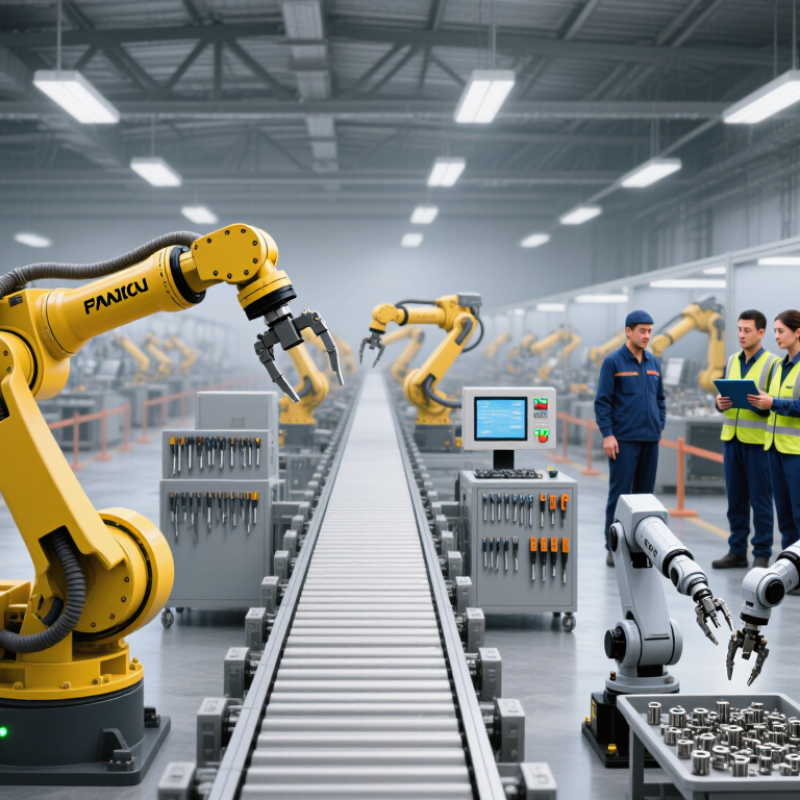
Understanding FANUC Robot Types and Their Core Differences
For buyers comparing industrial robots in 2026, the key difference is how each type moves through a workspace. Articulated arms rotate around multiple joints, making them useful for welding, machine tending, and tasks that need flexible reach. A six-axis arm can approach a part from several angles, but its reach and payload must suit the actual tool and workpiece. Small errors in that estimate matter.
SCARA robots move quickly across a horizontal plane and suit assembly or pick-and-place work. Delta robots use lightweight arms above a work area, often handling small items at high speed. Cartesian robots travel along straight axes, which can simplify long, precise movements, though their frames may occupy more floor space. Each type has trade-offs. There is no universal winner.
Compare payload with the gripper included, not just the product weight. Check reach at the required positions, cycle time, repeatability, mounting space, and exposure to dust or coolant. Collaborative models may support close human interaction, but safe operation still depends on the application, setup, and risk assessment. A specification sheet helps; a realistic test with the intended part helps more. That distinction is easy to miss. The best choice may also change when a line layout changes.
Comparing Payload, Reach, Speed, and Precision
For a 2026 robot purchase, compare the workpiece, gripper, and cable package as one load. Rated payload alone can mislead. A heavy tool held far from the wrist may reduce usable capacity, especially during fast direction changes. Leave margin. Check the manufacturer’s load chart and confirm the full assembly weight before choosing a model.
Reach should fit the actual cell, not just the longest point in a catalog diagram. Map the pickup, fixture, and handoff positions, then check for obstacles and awkward wrist angles. A longer arm may need more floor space and can be harder to guard. Measure twice. A quick layout review can prevent costly changes after installation.
Speed matters only when the robot can maintain the required path and settle accurately. Compare cycle times using your real sequence, including approach, grip, and wait time. Precision specifications also need context: repeatability is not the same as absolute positioning accuracy. Test the robot with the intended tool, payload, and fixtures. Even a careful simulation can miss cable drag or vibration. That small uncertainty deserves a real trial.
Matching FANUC Robot Categories to Industry Applications
Choosing an industrial robot starts with the task, not the model name.
Articulated arms suit welding, machine tending, and complex paths around vehicle parts. SCARA robots handle fast, precise assembly on compact electronics lines. Delta robots excel at picking light items from moving conveyor belts.
Short cycle times matter. So does reach.
The International Federation of Robotics reported
541,302 industrial robot installations worldwide in 2023,
in World Robotics 2024. That scale reflects varied production needs, not one universal application.
For palletizing, compare payload, reach, and stacking height against actual case sizes. For machine tending, check door clearance and whether the robot can reach the chuck without awkward repositioning.
Those details are easy to miss.
Collaborative robots can suit lower-speed tending or assembly where people work nearby, but a “collaborative” label alone does not make a cell safe. Assess the complete application and its risks.
The neat categories blur at the edges.
A real line rarely behaves like a brochure.
Before buying, test representative parts, tool weight, and cycle targets; estimates can be wrong. A robot that fits the process today may still need extra fixtures or guarding tomorrow.
Assessing Safety, Integration, and Operating Costs
For buyers choosing an industrial robot in 2026, the best model is not always the fastest or strongest. Safety, integration effort, and operating costs often matter more over years of production. Start with the actual task: payload, reach, cycle time, and how workers share the space. A robot handling heavy parts may need different safeguards from one tending a compact machine. Safety planning should consider stopping distances, tooling, access points, and foreseeable process changes. A safety-rated feature is not a substitute for a documented risk assessment.
Integration can quietly consume the budget. Check controller compatibility, communication protocols, available floor space, and whether existing fixtures need changes. Ask who will maintain the system and how quickly replacement parts can be sourced. Estimate energy use, scheduled service, training, and downtime—not just purchase price. A small cycle-time gain may look impressive on paper, yet fail to repay added complexity. I would not treat any cost estimate as exact; real production has surprises.
Tips: Request a sample layout and a task-based safety review. Compare total operating costs over several years, including downtime. Test the proposed setup with real parts before committing. Keep the first application simple. That is easy to overlook.
Which FANUC Robot Is Best for Buyers in 2026? — Assessing Safety, Integration, and Operating Costs
A robot’s architecture is a useful starting point: axis count affects reach and motion complexity, but safety, integration effort, and operating costs depend on the specific application and installation.
Typical configurations shown: Cartesian robots have 3 axes, SCARA robots 4, delta robots commonly 3–4, and articulated robots commonly 6. These are architecture-level figures, not specifications for a particular product. A site-specific risk assessment and total-cost analysis are still essential.
Selecting a FANUC Robot for Your 2026 Buying Requirements
A suitable robot starts with the task, not the model name.
List the part’s weight, the gripper, cables, and any sensors; their combined mass affects payload requirements. Then map the full motion path.
A 1.4-metre reach may look sufficient on paper, but fixtures and approach angles can make a nearby machine awkward to load.
Check cycle time under realistic conditions, including pauses for inspection and part presentation. Compare required repeatability with the tightest feature tolerance, and confirm wrist load limits in the technical documentation.
Small details matter.
A heavy tool mounted far from the wrist can change performance. So can heat, dust, washdown, or limited floor space.
Don’t choose by maximum speed alone.
Ask suppliers to simulate the actual process, then test a representative part and tool before committing. Verify controller compatibility, safety interfaces, service access, and operator training needs.
These checks may feel slower than comparing brochure specifications. They often reveal the real cost of a poor fit.
A model that works well in a clean demonstration cell may need different guarding or maintenance planning on your production line.
I’d still leave room for uncertainty: production conditions rarely match a perfect test setup exactly.