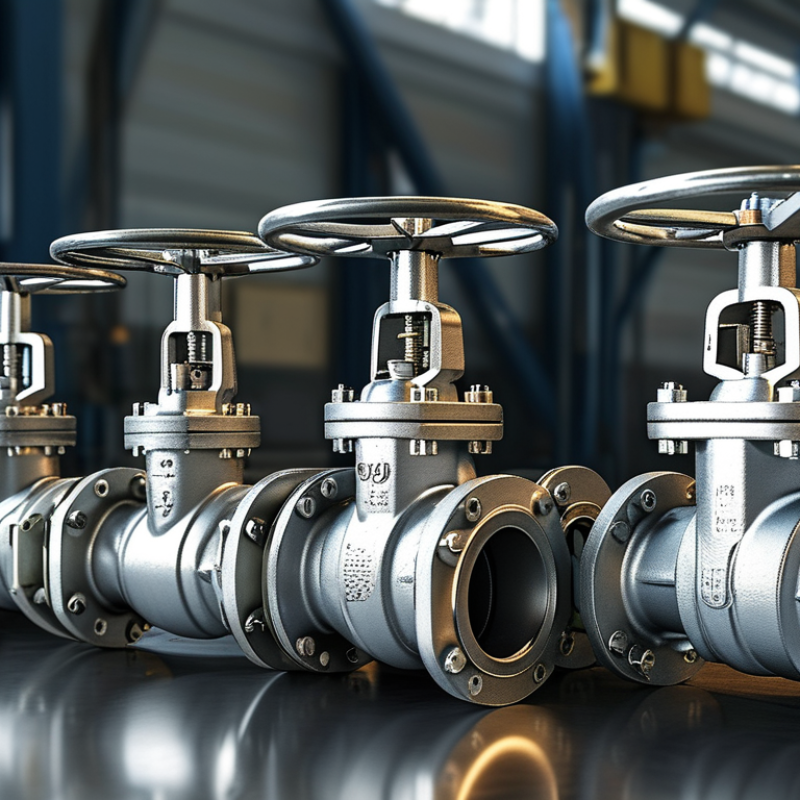
Why Choose Gate Valves for Your Industrial Needs?
Gate valves are vital components in industrial applications. They provide precise control over fluid flow. Their robust design ensures durability and long-lasting performance. Many industries rely on gate valves for their efficiency and reliability.
Choosing the right gate valve can impact overall system performance. These valves function well in on/off service but can present challenges in regulating flow. Maintaining gate valves requires regular checks for potential leaks or wear. Understanding their strengths and limitations is important for effective use.
Investing in high-quality gate valves can enhance operational safety. Proper selection based on material and size is crucial. Industrial professionals must evaluate their specific needs. This approach fosters informed decisions that lead to successful outcomes.
Understanding the Functionality of Gate Valves in Industry
Gate valves play a crucial role in industrial applications. They provide on-off control for flowing fluids. The design of gate valves allows for minimal pressure drop when fully opened. This characteristic is essential in industries like oil and gas, where efficiency is key. A gate valve can fully open or close with just a quarter turn.
However, maintenance is vital. Over time, sediment and debris can accumulate, affecting performance. Regular inspections can prevent failures. Gate valves are not ideal for throttling services; they do not provide flow regulation. This limitation requires careful consideration during selection. Properly installed and maintained gate valves ensure longevity.
Another aspect to consider is the sealing mechanism. Gate valves can exhibit leakage if seals are compromised. Testing for leaks can avoid costly downtime. Additionally, the choice of materials impacts durability. Extreme temperatures and pressures can weaken components. Each application is unique, requiring a tailored approach. Gate valves should align with specific operational needs for optimal performance.
Why Choose Gate Valves for Your Industrial Needs? - Understanding the Functionality of Gate Valves in Industry
| Feature | Gate Valve Type | Application | Material | Pressure Class |
| Durability | Wedge Gate Valve | Water Supply | Cast Iron | 150 psi |
| Flow Control | Parallel Slide Gate Valve | Oil and Gas | Stainless Steel | 300 psi |
| Tight Sealing | Expanding Gate Valve | Chemical Processing | Bronze | 600 psi |
| Versatility | Duplex Gate Valve | Pulp and Paper | Carbon Steel | 1500 psi |
Key Advantages of Using Gate Valves for Fluid Control
Gate valves are a popular choice for fluid control in various industrial applications. These valves excel in providing a full flow area, minimizing pressure drops. According to a report by the Fluid Control Association, gate valves can handle high flow rates effectively, making them ideal for systems in power generation and water treatment.
One key advantage of gate valves is their durability. They are designed to withstand harsh environments. The material selection often includes stainless steel or ductile iron, which enhances their lifespan. Data from the American Society of Mechanical Engineers indicates that, when properly maintained, gate valves can last over 20 years. This reduces replacement costs and downtime, a critical factor in industrial settings.
Despite their advantages, gate valves have limitations. Their fluid-tight seal is not always guaranteed when they are left partially open, leading to potential leaks. Maintenance schedules can be overlooked, affecting performance and safety. Many industries are now exploring alternative valve types that offer more consistent sealing in specific applications. Balancing these options requires thorough understanding and careful analysis.
Comparative Analysis: Gate Valves vs. Other Valve Types
Gate valves are often favored in industrial applications for their ability to provide a tight seal. However, it’s essential to compare them to other valve types to understand their unique benefits and limitations. While gate valves excel in on-off service, they are not ideal for throttling flow. This can lead to wear and tear on the valve components if improperly used.
In contrast, globe valves are better suited for flow regulation. They can handle variable flow rates with more precision than gate valves. However, globe valves generally introduce more pressure drop in the system. Butterfly valves, on the other hand, offer quicker operation but might not achieve the same level of sealing as gate valves. Choosing the right valve depends on specific application requirements and potential risks associated with each type.
It is crucial to assess not just the performance but also the long-term reliability of each valve. Failure to do so could lead to maintenance issues or system inefficiencies. Evaluating installation and operational conditions can reveal potential drawbacks that may not be obvious. Ultimately, selecting the appropriate valve involves balancing performance, maintenance needs, and system design considerations. This reflective process will help ensure you make an informed decision for your industrial needs.
Applications of Gate Valves in Various Industrial Sectors
Gate valves are essential in many industrial applications. They are commonly used in water treatment facilities, oil refineries, and power plants. These valves excel in on-off control of fluid flow. Their design allows for minimal pressure loss. This is vital in systems where efficiency is key.
In the chemical industry, gate valves play a crucial role. They can handle high-pressure environments and corrosive fluids. Their robust construction helps reduce maintenance needs. In manufacturing plants, these valves help manage steam and liquid transfer. They ensure safety and reliability in various processes.
Yet, gate valves are not always perfect. They can be slow to operate compared to other valves. In some situations, they may not close tightly enough, leading to leaks. It’s essential to assess the specific needs of your application. Evaluating the advantages and limitations ensures you make the right choice.
Maintenance and Longevity of Gate Valves in Operations
Gate valves are essential in industrial settings due to their reliability and efficient operation. Regular maintenance is crucial for ensuring their longevity. Neglecting to inspect these valves can lead to significant issues. Operators should conduct periodic checks to identify corrosion or wear. Replacing worn components can extend the valve's service life.
In operations, gate valves can encounter stressful conditions. Heat and pressure fluctuations can affect their performance. Using proper installation techniques helps mitigate these risks. Additionally, keeping the surrounding area clean improves the valve's functionality. Sometimes, a simple cleaning can resolve minor operational problems. Operators need to recognize when a valve requires more than just a cleaning.
Documenting maintenance activities is vital. A log helps track repairs and replacements. This practice encourages proactive management of equipment. However, sometimes records may not be fully accurate, leading to oversight. Regular audits can remedy such lapses in record-keeping. Adopting a culture of accountability fosters better maintenance habits and enhances the overall reliability of gate valves.
Why Choose Gate Valves for Your Industrial Needs?
This chart illustrates the maintenance frequency and longevity of gate valves in various industrial applications. Gate valves are favored for their durability and effectiveness in controlling flow, as highlighted by the following data: