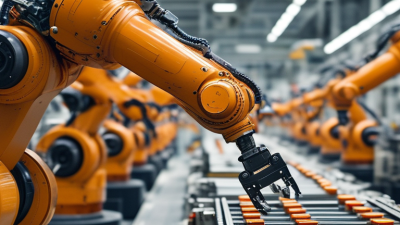
How to Choose the Best Robotic Welder for Your Business?
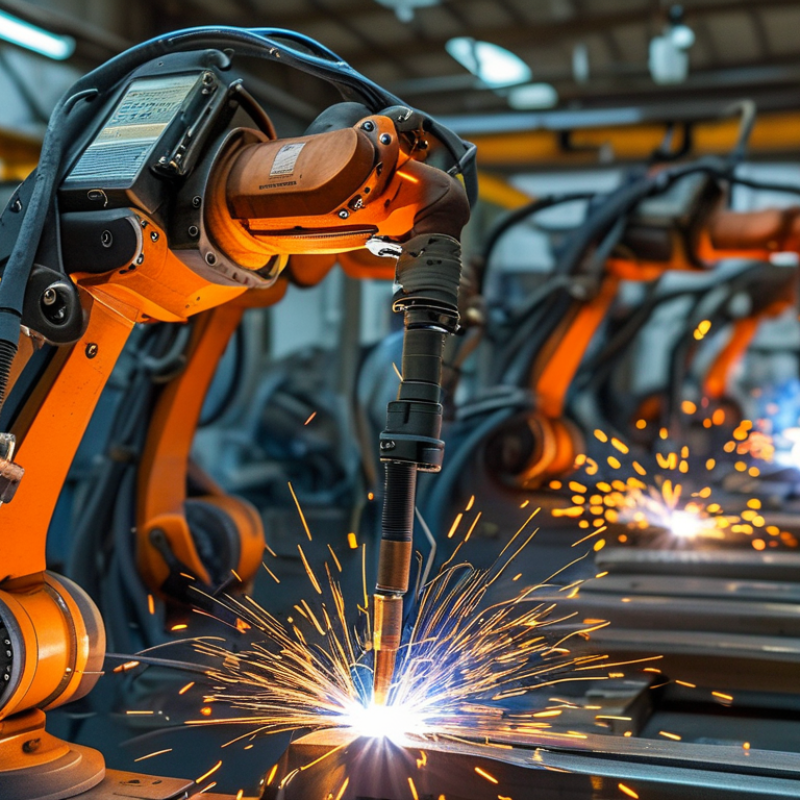
Choosing the right robotic welder for your business is crucial. According to John Smith, an industry expert in automation, "Investing in the right equipment can transform your manufacturing process." Robotic welders are essential for improving efficiency and precision in welding tasks.
However, selecting a robotic welder involves careful consideration. You must assess your specific needs, production volume, and available space. While many options exist, not all robotic welders are equal. Each brand and model has its strengths. Make sure to research different features and capabilities.
Additionally, getting feedback from current users can provide insights. Reflect on your initial choices and learn from previous experiences. This process can be overwhelming. The goal is to find a robotic welder that not only meets your requirements but also enhances productivity and quality.
Understanding Your Welding Needs and Specifications
Selecting the right robotic welder begins with a thorough understanding of your business's specific welding needs.
Consider the materials you work with. Are they primarily steel or aluminum? Each material requires different settings and parameters,
which will drastically affect your welding efficiency and quality. Assess whether you are working with thin-walled or thick materials,
as this will guide you in defining the type of welder best suited to your tasks.
Evaluate production volume as well. If your business experiences high demand, a high-speed robotic welder might be essential.
On the other hand, for lower-volume projects, you might not need the most advanced functionality. This leads to a crucial reflection—investing in a machine
that exceeds your needs can strain your budget. Every business is unique, and the welder should suit your output requirements.
Another aspect to consider is space and layout in your manufacturing facility. Some robotic welders require significant floor space
and specific cell configurations. Poor space management can lead to inefficiency and safety hazards. An ideal welder seamlessly integrates into
your existing processes. Ultimately, understanding these specifications ensures that you choose a robotic welder that balances performance with practicality.
Evaluating Different Types of Robotic Welders
When choosing a robotic welder for your business, consider the various types available. Arc welding robots, for instance, are popular in industries such as automotive, where precision is crucial. According to a report from the International Federation of Robotics, the automotive sector accounts for over 30% of all industrial robot installations. This indicates a clear preference for automation in vehicle production.
Spot welding robots are another option worth exploring. These robots excel in high-speed applications, making them ideal for mass production tasks. The ability to perform thousands of welds per minute can significantly reduce labor costs. Research shows that integrating robotic systems can enhance productivity by up to 25%. Factors such as speed and accuracy directly influence operational efficiency.
Consider different welding technologies based on your production needs. If your business demands versatility, look into programmable welding arms. These robots can adapt to various tasks and materials. Understanding the specific welding processes you require can guide your choice.
Evaluating your production volume is essential. A high-volume production line may benefit from dedicated, high-speed robotic welders. However, for smaller projects, a flexible robotic welder could be more cost-effective.
Think about the implementation of advanced technologies like AI-enhanced robots. They are capable of learning from their environment and improving over time. Assess the long-term value these advanced features bring to your business.
Key Features to Look for in a Robotic Welder
When selecting a robotic welder for your business, several key features warrant attention. First, pay close attention to the welding process compatibility. Different applications require different processes, such as MIG, TIG, or spot welding. According to a report by the International Federation of Robotics, about 74% of manufacturers prefer robotic MIG welding for its versatility. Assessing your production needs is critical to ensure you select a welder that aligns with your processes.
Next, consider ease of programming and integration. A user-friendly interface can reduce training time and enhance productivity. Data from manufacturing industry surveys reveal that 65% of companies reported improved efficiency due to easy-to-use programming systems. Ensure the welder can seamlessly integrate with existing machinery to minimize downtime.
One crucial aspect is the safety features of the robotic welder. Safety should always be a priority in any workplace. Look for welders with advanced safety mechanisms like automatic shutoff and protective barriers. Maintaining a focus on safety can prevent accidents and protect your investment.
Evaluate the total cost of ownership as well. Initial costs can be significant, but hidden expenses like maintenance and operation should not be overlooked. Regular maintenance prolongs the welder's lifespan, making it a sound investment. Also, consider the expected return on investment—many businesses start seeing returns within two years, as reported by industry analysts.
Assessing Compatibility with Existing Manufacturing Systems
Assessing the compatibility of a robotic welder with existing manufacturing systems is crucial. Many manufacturers overlook this step, which can lead to inefficiencies and increased costs. A study from the National Institute of Standards and Technology highlights that 25% of automation projects fail due to compatibility issues.
Before investing in a robotic welder, it is essential to evaluate your current setup. Check if the new system will integrate smoothly with existing machinery and software. This can prevent the need for expensive modifications. For instance, consider the communication protocols and data formats used by your current machines. According to a recent report by the International Federation of Robotics, systems that align well with legacy equipment reduce downtime by up to 40%.
Another aspect to reflect on is the adaptability of the robotic welder. Will it accommodate future production demands? Older systems might limit scalability. Data from market research shows that businesses that prioritize flexible solutions can increase production rates by 50%. Reassessing and understanding your manufacturing environment ensures that the robotic welder you select will not become obsolete in a few years. Balancing cost and compatibility can often be a complex decision with lasting implications.
How to Choose the Best Robotic Welder for Your Business? - Assessing Compatibility with Existing Manufacturing Systems
| Feature |
Description |
Importance Level |
Compatibility with Existing Systems |
| Ease of Programming |
The complexity involved in programming the welder |
High |
Ensure compatibility with current software interfaces |
| Welding Speed |
The speed at which the robot can perform welding operations |
Medium |
Check if it matches the cycle times of current systems |
| Payload Capacity |
The maximum weight the robotic welder can handle |
High |
Must fit the parts and materials used in existing operations |
| Flexibility |
Ability to perform various welding tasks |
Medium |
Consideration of multiple part designs currently in use |
| Safety Features |
Built-in safety mechanisms to protect operators |
High |
Integration with existing safety systems and protocols |
Budget Considerations and Return on Investment Analysis
When considering a robotic welder for your business, budget is critical. It's essential to calculate not just the initial purchase price but also ongoing operating costs. Variables like maintenance, training, and operational efficiency all add to the total investment. A higher initial price may yield better long-term savings and productivity.
Researching the expected return on investment (ROI) is necessary. An efficient robotic welder can reduce labor costs and enhance precision. Estimate how quickly the machine can pay for itself through increased output and fewer errors. In some cases, a cheaper welder may lead to more frequent repairs or lower production rates. This might seem like a savings at first glance, but it can cost more over time.
Look at financing options as well. Many suppliers offer payment plans that can make high-quality robots more accessible. This approach allows for balancing cash flow with the expenses of new technology. Don’t forget to assess the skills of your workforce. Investing in training can maximize the ROI on your robotic welder.