How to Choose a Screw Conveyor in 2026?
Choosing a Screw Conveyor in 2026 requires more than comparing price, diameter, and motor size. The material decides much of the design. Powdered sugar, damp limestone, plastic pellets, and sticky sludge behave differently inside the same trough. A practical selection begins with capacity, bulk density, moisture, temperature, particle size, and flowability. It also considers incline, conveying distance, loading method, and discharge points.
Bulk-solids authority Andrew Jenike offered a useful principle: “Design for the material, not merely for the machine.” That warning still matters. A 12-inch conveyor may move dry grain smoothly, yet struggle with compacted powder after a humid night. Abrasive sand may demand hardened flights, replaceable liners, and stronger hanger bearings. Food applications require cleanable surfaces, suitable seals, and careful dead-space control. Explosive dust risks also require professional hazard assessment and compliant equipment selection.
The best option balances performance, maintenance, energy use, and service life. Look closely at the drive torque. Check shaft deflection. Ask how quickly a bearing can be replaced. Small details matter.
Do not trust capacity charts blindly. They often assume ideal material conditions. Real installations include surging feed, uneven loading, and occasional blockages. This is where experience becomes valuable. A site survey, sample testing, and a clear duty specification can prevent expensive redesigns. I would also question any recommendation that ignores future production changes. Maybe the cheapest Screw Conveyor is sufficient today. Maybe it becomes a bottleneck next year. A reliable 2026 decision combines manufacturer data, operator feedback, and measurable operating conditions.
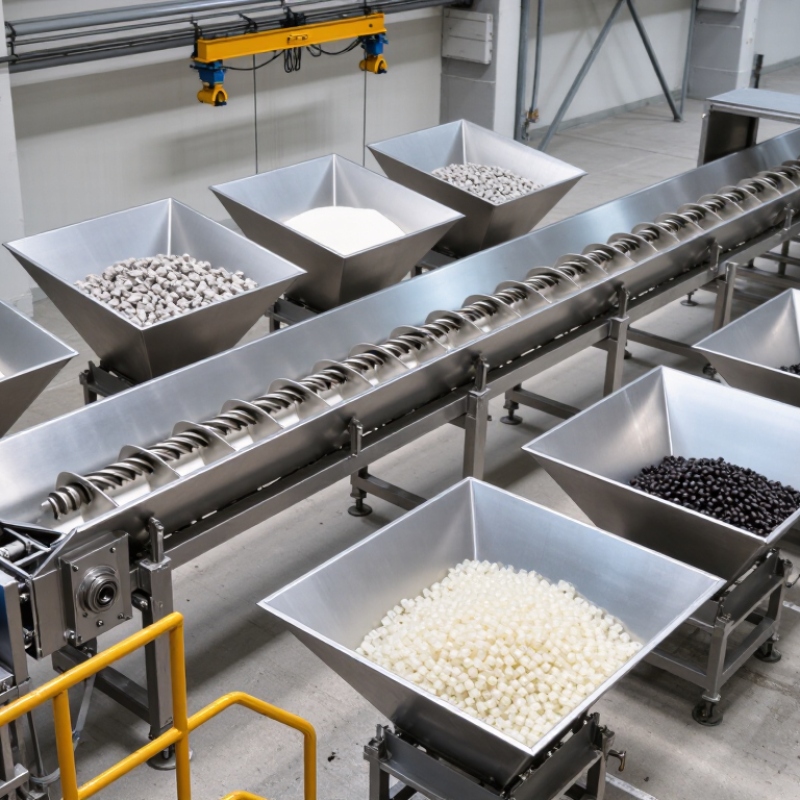
Define the Material and Conveying Requirements
Start with the material, not the conveyor frame. Record its bulk density, particle size, moisture, temperature, and abrasiveness. These values influence screw diameter, speed, trough design, and drive torque. Powder may bridge. Granules can segregate. Sticky material may cling to the flight and reduce effective capacity. Do not rely on a catalog description alone. Test a representative sample when flow behavior is uncertain.
Define the required rate in kilograms per hour, not simply “high capacity.” Measure the horizontal distance, elevation change, inlet arrangement, and discharge conditions. A steep incline usually lowers capacity and may require a different screw configuration. Consider operating hours, starts per hour, cleaning method, and access for maintenance. A conveyor running eight hours daily needs a different duty assessment than one starting every few minutes. Small details matter.
Match the material profile with the conveying duty, then review the engineering assumptions. Ask for torque, speed, fill-level, and power calculations. Check how the figures were produced. The neatest spreadsheet can still hide an oversized motor or an underfed inlet. That is worth challenging. Confirm food-contact, dust-control, guarding, and local electrical requirements before ordering. Leave a practical margin, but do not oversize blindly; excessive residence time can damage fragile particles. Document every assumption, including the one that feels obvious.
Choose the Suitable Screw Conveyor Design
Choosing a suitable screw conveyor design starts with the material, not the machine. A dry powder behaves differently from damp sludge, sticky clay, or coarse grain. Record bulk density, moisture, particle size, temperature, and abrasiveness before requesting a quotation. Small details matter. A material that bridges easily may need a larger diameter, slower rotation, or a different inlet arrangement.
Capacity and conveying distance guide the basic dimensions. Higher throughput often requires a wider screw, but increasing speed is not always the best solution. Excessive speed can damage fragile particles, create dust, and increase power consumption. For horizontal transport, a standard trough design may work well. Inclined conveying usually needs reduced loading and higher torque. Vertical movement demands careful testing because performance can change sharply with material behavior.
I have seen projects fail because designers measured only hourly capacity. Motor power, shaft strength, hanger spacing, and access for cleaning also deserve attention. A shaftless design can handle sticky material, yet it may wear faster under heavy abrasive service. A stainless construction may suit hygienic areas, while carbon steel can be practical for ordinary bulk handling. No design is perfect. Leave room for inspection doors, replacement parts, and future process changes. Pilot testing is wise when the material is unusual or inconsistent. One overlooked factor can affect the entire conveying line.
Calculate Capacity, Speed, and Power Needs
How to Choose a Screw Conveyor in 2026?
Capacity, speed, and power should be calculated together, not selected from a catalog alone. Start with material flow rate, bulk density, moisture, particle size, and conveyor length. CEMA’s Screw Conveyor for Bulk Materials provides capacity tables using screw diameter, pitch, loading, and speed. For a quick estimate, capacity rises with cross-sectional area, pitch, rpm, bulk density, and fill factor. A 30% fill may suit free-flowing products, while sticky materials often require less loading. Confirm the real density through representative sampling. Laboratory results can differ from a handbook value.
Speed should meet capacity without creating segregation, dust, or excessive wear. Calculate rpm from the required mass flow and the selected screw’s capacity per revolution. Power includes friction, horizontal conveying, and elevation. For lifting, use P = QH/367, where P is kilowatts, Q is tonnes per hour, and H is metres. Add the friction and starting allowances recommended by CEMA. A spreadsheet can be precise and still be wrong. I have seen density assumptions change the motor size more than expected.
Tips: Measure the material after storage, not only when it arrives. Check startup torque with a loaded conveyor. Leave practical margin, but avoid oversized motors. Ask the supplier for calculations, not just a model number. Recheck power when incline, temperature, or moisture changes. CEMA tables are valuable, yet field testing remains the safer decision.
How to Choose a Screw Conveyor in 2026?
Preliminary sizing example for a horizontal screw conveyor handling bulk material with a bulk density of 750 kg/m³. The calculation assumes a 300 mm screw diameter, 300 mm pitch, 35% trough loading, and a 10 m conveyor length.
Capacity calculation: Capacity is estimated from screw diameter, pitch, rotational speed, loading factor, and bulk density. At 60 rpm, the calculated conveying capacity is approximately 20 t/h. The power values are preliminary drive-input estimates including conveying friction and a starting allowance; actual selection should also consider inclination, material abrasiveness, moisture, inlet loading, and starting torque.
Evaluate Materials, Safety, and Maintenance Features
How to Choose a Screw Conveyor in 2026?
Evaluate Materials, Safety, and Maintenance Features
A practical evaluation starts with the material, not the conveyor’s appearance. Check particle size, moisture, temperature, abrasiveness, and bulk density. Fine powder may leak through poor seals, while wet material can bridge above the screw. Choose flight geometry and trough clearance for the actual product. The first choice is not always the best choice. A small test with representative material can reveal unexpected buildup or uneven flow.
Safety needs equal attention. Specify guards around rotating shafts, accessible emergency stops, and secure inspection covers. Sensors can help detect overloads, abnormal temperatures, or blocked discharge points. Confirm that electrical components suit the operating environment. Dust control also matters, especially during loading and cleaning. A conveyor may meet its output target yet still create avoidable risks near transfer points.
Maintenance should be simple enough for a busy shift team. Look for replaceable wear liners, accessible bearings, clear lubrication points, and quick-release covers. Keep spare seals and fasteners nearby. Record vibration, noise, and motor temperature during routine checks. Small changes often appear before failure. However, maintenance plans are sometimes too optimistic; difficult access can turn a ten-minute inspection into an hour-long shutdown.
Tips: Ask for a maintenance demonstration before purchase. Measure cleaning time with the actual product. Check whether operators can isolate power safely. Review material compatibility charts, but verify uncertain results through testing. Record every early blockage, because repeated “minor” problems usually indicate a design mismatch.