10 Essential Tips for Implementing Robotic Automation in Your Business
In today's rapidly evolving business landscape, the implementation of robotic automation has become a pivotal strategy for companies seeking to enhance efficiency and drive innovation. According to Dr. Elizabeth Carter, a leading expert in the field of robotic automation, "The future of work lies in the seamless collaboration between humans and robots, where automation frees employees to focus on higher-value tasks." Embracing this transformative technology not only streamlines operations but also empowers businesses to adapt to changing market demands.
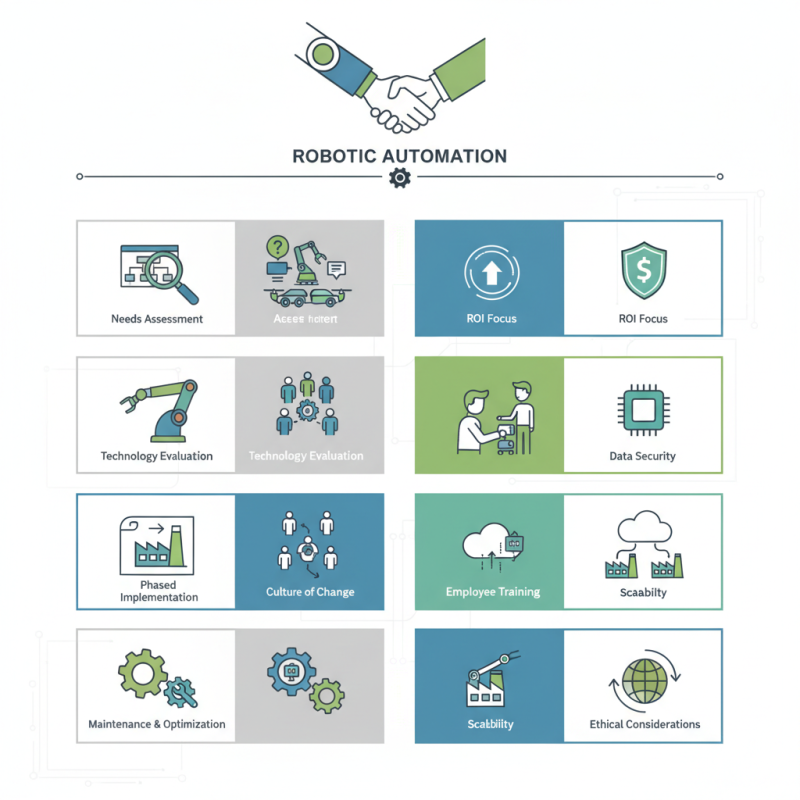
As organizations begin to explore the potential of robotic automation, it is essential to approach the integration process with careful planning and consideration. The journey toward effective robotic automation involves understanding the unique needs of your business, evaluating the right technologies, and fostering a culture that embraces change. By implementing key strategies, companies can not only maximize the benefits of robotic systems but also ensure a smooth transition for their workforce. In this article, we present ten essential tips for businesses aiming to successfully implement robotic automation, paving the way for increased productivity and competitiveness in the marketplace.
Understanding the Benefits of Robotic Automation for Your Business
Robotic automation has emerged as a transformative force for businesses across various sectors. By incorporating robotic processes, organizations can significantly enhance productivity and efficiency. One of the primary benefits of robotic automation is its ability to streamline repetitive tasks. This not only reduces the likelihood of human error but also allows employees to focus on more strategic tasks that require creativity and critical thinking. As a result, companies can optimize their workforce and allocate resources more effectively.
Furthermore, robotic automation can lead to substantial cost savings over time. By automating routine processes, businesses can minimize labor costs and reduce overhead associated with manual operations. Additionally, robots can operate around the clock without the need for breaks, which enhances overall throughput and accelerates project timelines. As industries become increasingly competitive, leveraging robotic automation not only helps in reducing operational costs but also positions businesses to respond more swiftly to market demands, ultimately driving growth and profitability.
Assessing Your Business Processes for Automation Opportunities
Assessing your business processes for automation opportunities is a critical first step in successfully implementing robotic automation. According to a report by McKinsey, up to 45% of activities that individuals are paid to perform can be automated, making it essential for businesses to evaluate their workflows meticulously. By mapping out existing processes, organizations can identify repetitive tasks that consume valuable time and resources. This analysis not only highlights potential areas for improvement but also lays the foundation for a targeted automation strategy.
Moreover, a study from Deloitte emphasizes that companies that took the time to assess their automation readiness saw a 20-30% increase in process efficiency. This assessment involves scrutinizing the flow of tasks, identifying bottlenecks, and understanding the interplay between various processes. Tools such as process mining and workflow analysis can provide insights into where automation can deliver the most significant benefits. In doing so, businesses can streamline operations, reduce errors, and empower employees to focus on more strategic initiatives that drive growth and innovation.
Selecting the Right Robotics Solutions for Your Needs
When considering robotic automation for your business, selecting the right robotics solutions tailored to your specific needs is paramount. A recent report from McKinsey highlights that nearly 60% of jobs could be automated, yet businesses must carefully evaluate which processes will benefit the most from robotic integration. This strategic selection ensures that the implementation is not only efficient but also cost-effective. It's important to assess the potential return on investment (ROI) for automation projects. According to a study by PwC, companies that strategically adopt robotic automation can increase productivity by up to 40%, offering a significant leap in operational efficiency and labor optimization.
To start the selection process, businesses should begin by identifying repetitive tasks that consume time and resources. This involves analyzing workflow bottlenecks and scrutizing areas where human error is prominent. In an industry where every second counts, using data analytics tools can help in pinpointing operational deficiencies that robotics can address. Additionally, conducting a detailed needs assessment will help in choosing the right type of robotic system—industrial robots for manufacturing, collaborative robots (cobots) for assembly tasks, or automation software for digital processes. For instance, according to a report by the International Federation of Robotics, investment in industrial robots is expected to increase by 14% annually, underscoring the importance of adopting the right technologies to stay ahead in a competitive marketplace.
10 Essential Tips for Implementing Robotic Automation in Your Business
| Tip Number |
Tip Description |
Implementation Difficulty |
Estimated ROI (%) |
| 1 |
Identify Repetitive Tasks |
Low |
20% |
| 2 |
Conduct Cost-Benefit Analysis |
Medium |
25% |
| 3 |
Choose the Right Technology |
High |
30% |
| 4 |
Pilot Testing |
Medium |
15% |
| 5 |
Train Your Staff |
Medium |
18% |
| 6 |
Set Clear Objectives |
Low |
22% |
| 7 |
Monitor Performance |
Medium |
28% |
| 8 |
Gather Feedback |
Low |
23% |
| 9 |
Plan for Scalability |
High |
35% |
| 10 |
Review and Iterate |
Medium |
27% |
Developing a Robust Implementation Plan for Automation
When developing a robust implementation plan for automation in your business, the first step is to conduct a thorough assessment of your current workflows. This involves identifying repetitive tasks that can be streamlined through robotic automation. Engage your team in this process to gather insights on bottlenecks and inefficiencies. Understanding the scope of automation within your operations will enable you to prioritize which processes to automate first, ensuring that your focus remains on maximizing efficiency and productivity.
Next, it is crucial to establish clear objectives and metrics that will guide your automation project. Define what success looks like for each automated task and set measurable goals, such as time savings or error reduction rates. Create a detailed timeline for implementation that includes phases for testing and feedback. This iterative approach allows for refinements based on real-world application, fostering a smoother transition to automated processes. Additionally, investing in training for your employees will facilitate adaptation to new technologies, ensuring that they feel empowered and supported throughout the change.
Automation Implementation Progress by Department
This bar chart represents the implementation progress of robotic automation across different departments in a business. Each department's percentage indicates their advancement in automation projects, highlighting areas for further development.
Training Your Workforce for Successful Robot Integration
Incorporating robotic automation into your business can bring significant benefits, but the success of this integration largely depends on how well you prepare your workforce. Training your employees is crucial, as it ensures that they are equipped with the necessary skills to work alongside new technology. Begin by assessing the current skill levels of your team and identifying gaps that need to be filled. This can involve workshops, hands-on training sessions, or even online courses focused on the specific robotics being used.
A key tip for effective training is to create a collaborative learning environment. Encourage employees to share their insights and experiences with automation, fostering a culture of knowledge exchange. Additionally, involving a diverse group of employees in training helps gather various perspectives, enabling better problem-solving and innovation as they adapt to working with robots. Remember, it’s not just about teaching technical skills; instilling a mindset that embraces change and continuous learning is essential for long-term success.
Another important aspect of training is the role of mentorship. Pairing less experienced workers with those who have a stronger grasp of automation can facilitate knowledge transfer and build confidence across the team. As workers become more comfortable with robotic systems, they’ll not only increase productivity but also identify new opportunities for innovation within the organization. Emphasizing team collaboration and support can significantly enhance the overall effectiveness of robotic integration in your business.