
Top Lorry Mechanic Tools Suppliers in China?
Choosing among the top Lorry Mechanic Tools suppliers in China takes more than comparing catalogue prices. A workshop needs tools that fit real service conditions: stubborn wheel nuts, tight engine bays, and repeated use across long shifts. Buyers should examine product materials, torque specifications, spare-part availability, and quality-control records. Ask suppliers for clear documentation and sample units before placing a large order. Small details matter.
For an illustrative expert perspective, this guide uses a fictional workshop-equipment specialist, Chen Wei—not a verified industry source. His editorial principle is: “A tool earns trust through consistent performance, clear specifications, and support after the sale.” Treat that line as a guide, not a sourced quotation. The same standard helps distinguish established manufacturers from sellers offering limited product information.
This overview will compare supplier capabilities, product ranges, customization options, and communication practices. It will also consider practical checks, such as inspecting socket finishes, testing wrench fit, and confirming packaging protects tools during transit. A polished website is not proof of dependable quality. Neither is the lowest price. Supplier claims deserve careful review, and buyers should verify important details directly. The goal is a shortlist suited to your workshop’s vehicles, workload, and maintenance budget—not a one-size-fits-all ranking.
What Lorry Mechanic Tools Include and How They Are Used
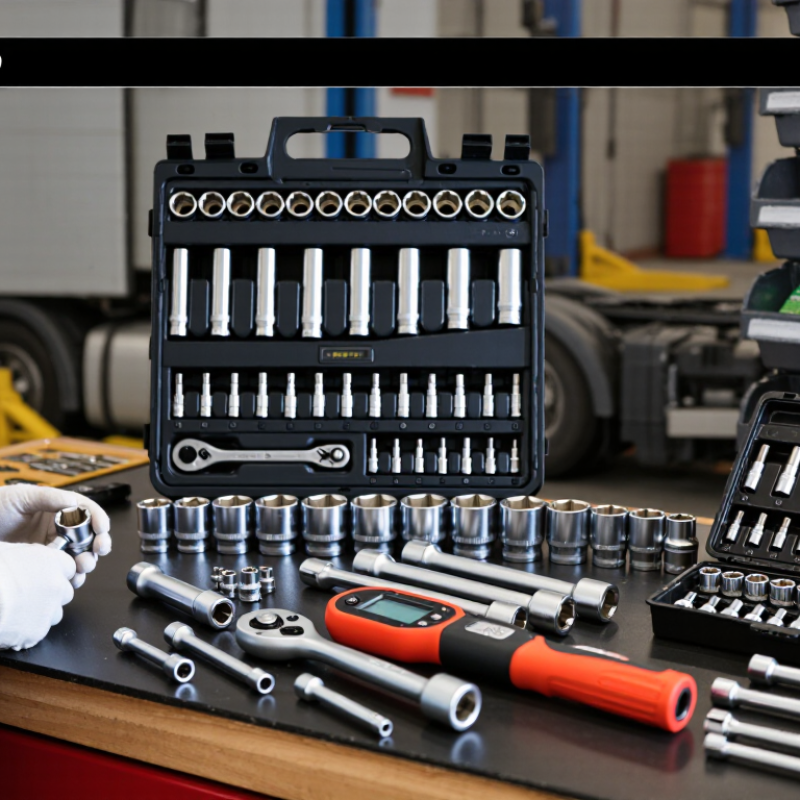
Lorry mechanic tools cover inspection, diagnosis, lifting, and repair. A socket set and impact wrench remove wheel nuts and stubborn fasteners; a calibrated torque wrench then tightens them to the vehicle maker’s specification. For electrical faults, a multimeter checks voltage and continuity, while a diagnostic scanner reads fault codes. Useful workshop equipment also includes tyre-pressure and tread-depth gauges, brake-service tools, a hydraulic jack, and rated axle stands.
CVSA reported 48,761 commercial motor vehicle inspections during its 2024 International Roadcheck. That scale of inspection highlights why routine checks matter, though an inspection count alone does not show which tools prevent defects. Mechanics use gauges to spot tyre issues, scan tools to investigate warning lights, and brake tools to measure wear or retract components. A scanner points to a fault; it does not prove the cause. Hands-on checks still matter.
Tips: Keep torque tools calibrated, confirm jack and stand ratings before lifting, and secure the vehicle on firm, level ground. Check readings against service data, not memory. A tool can look ready and still be wrong. CVSA’s 2024 International Roadcheck results provide useful context for the importance of commercial-vehicle inspections.
| Tool Category | Typical Tools | How They Are Used | Common Lorry Applications | What to Check When Sourcing |
|---|---|---|---|---|
| Hand Tools | Combination wrenches, sockets, ratchets, breaker bars, screwdrivers, and pliers | Used to loosen or tighten fasteners, remove covers, adjust components, and carry out routine repairs. | Engine accessories, suspension parts, battery connections, body fittings, and general workshop maintenance | Confirm metric size coverage, drive sizes, material quality, finish, and whether sockets are designed for hand use or impact use. |
| Torque Tools | Torque wrenches and torque multipliers | Apply a specified amount of tightening force to help reduce under-tightening or over-tightening. | Wheel fasteners, cylinder head fasteners, and other components with manufacturer-specified torque requirements | Check the working range, calibration procedure, accuracy information, drive size, and suitability for the required torque values. |
| Lifting and Support Equipment | Hydraulic jacks, axle stands, workshop cranes, and transmission jacks | Raise or support a vehicle or component during inspection, removal, and installation. | Wheel and brake service, gearbox work, and under-vehicle repairs | Verify rated capacity, lift range, stability, safety features, and compatibility with the vehicle's weight and lifting points. Never rely on a jack alone for support. |
| Pneumatic and Impact Tools | Impact wrenches, air ratchets, air hoses, and air preparation units | Use compressed air to speed up repetitive fastening and removal tasks. | Wheel service, chassis work, and workshop jobs involving frequent fastener removal | Check air pressure and airflow requirements, connection type, drive size, tool duty rating, and the need for suitable impact-rated sockets. |
| Brake Service Tools | Brake piston wind-back tools, brake bleeders, flare nut wrenches, and brake drum tools | Assist with brake component removal, piston retraction, hydraulic bleeding, and servicing of brake lines. | Disc and drum brake maintenance on compatible vehicle designs | Confirm compatibility with the brake system and vehicle design; use the correct fluid and follow the vehicle service procedure. |
| Engine and Fuel-System Tools | Compression testers, leak-down testers, injector pullers, and fuel-line tools | Measure engine condition or help remove and service fuel-system components. | Diesel engine diagnostics, injector work, and investigation of starting or performance problems | Check test range, adapters, connection sizes, pressure rating, and compatibility with the engine and fuel system being serviced. |
| Electrical Diagnostic Tools | Digital multimeters, test lamps, circuit probes, and battery testers | Measure voltage, resistance, and continuity, or assess battery and charging-system performance. | Starting, charging, lighting, wiring, and sensor-circuit diagnosis | Review measurement range, overload protection, lead quality, safety rating, and whether the instrument suits the expected circuit voltage. |
| Electronic Diagnostic Equipment | Commercial-vehicle diagnostic scanners and code readers | Read fault codes and, where supported, view live data or run system tests through vehicle diagnostic connections. | Engine, after-treatment, transmission, braking, and other electronically controlled systems | Confirm vehicle and system coverage, supported communication protocols, software update terms, and connector compatibility before purchase. |
| Measuring and Inspection Tools | Dial indicators, micrometers, vernier calipers, feeler gauges, and inspection mirrors | Measure clearances, dimensions, runout, or wear and inspect areas that are difficult to see directly. | Engine, wheel-end, brake, and driveline inspections | Choose an appropriate measurement range and resolution, and check calibration needs, readability, and protection from workshop contamination. |
| Workshop Consumables and Safety Equipment | Gloves, eye protection, drain pans, work lights, and tool storage | Support safe, organized servicing and help collect fluids or illuminate work areas. | Routine maintenance and repair across the workshop | Check material suitability, load or fluid capacity where relevant, durability, and compliance with applicable workplace safety requirements. |