
Global buyers are demanding tighter tolerances, faster delivery, and stronger supply assurance from CNC suppliers. The pressure is measurable. The International Federation of Robotics reported 541,302 industrial robots were installed worldwide in 2023. That figure reflects a manufacturing sector increasingly dependent on accurate, repeatable components.
This article introduces 10 Best CNC Machinery Parts Suppliers for Global Buyers. It focuses on companies supporting machining centers, automation lines, tooling systems, and replacement programs. The term Machinery Cnc Parts covers practical items, including spindle components, linear guides, ball screws, collets, couplings, sensors, and precision brackets. Each supplier should be examined through more than catalog size. Buyers need evidence of material traceability, dimensional inspection, production capacity, and export experience.
Look for measurable proof. ISO 9001 certification can indicate a documented quality system, although certification alone does not guarantee consistent parts. The International Organization for Standardization’s ISO 230 series also provides useful references for machine-tool accuracy and testing. Ask for inspection reports, tolerance records, sample approval procedures, and clear packaging details. A sealed bearing may arrive quickly, but its real value depends on fit, lubrication, and service life.
There is no perfect supplier.
Price comparisons can mislead. A low quotation may exclude tooling, inspection, customs handling, or replacement support. Delivery promises can also change when materials are constrained. This guide therefore considers technical capability, communication quality, quality controls, customization, lead time, and total purchasing risk. The final ranking is practical, but buyers should still validate each supplier against their own drawings, machine models, operating environment, and compliance requirements.
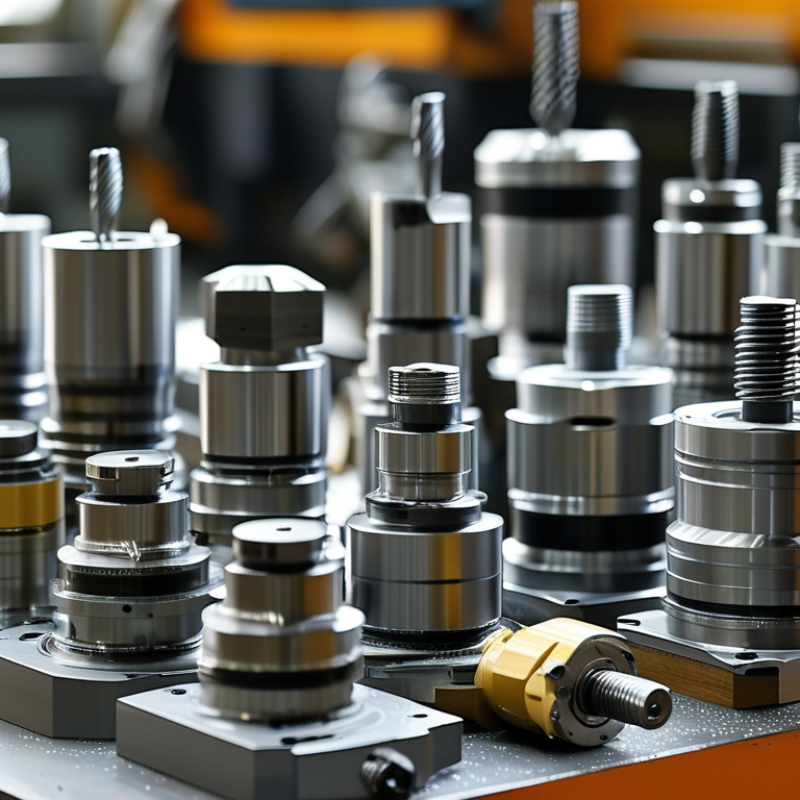
CNC machinery parts are precision components made by computer-controlled cutting, drilling, turning, or grinding.
They include shafts, housings, brackets, fixtures, gears, and custom assemblies. Common materials include aluminum, stainless steel, carbon steel, brass, titanium, engineering plastics, and hardened tool steel. Each material changes the cutting speed, tool choice, heat control, and final cost.
A 3-axis CNC machine moves along X, Y, and Z directions. It suits flat plates, pockets, holes, and many standard mechanical parts.
A 4-axis system adds rotary positioning, reducing repeated setups for parts with features around one side.
A 5-axis machine tilts and rotates the workpiece while cutting. This helps produce impellers, medical components, curved molds, and compact aerospace structures with fewer fixtures. Fewer setups can improve alignment, but programming becomes more demanding.
Reliable suppliers should explain their process, not only quote a price.
Ask about material certificates, tolerance inspection, surface treatment, calibration records, and first-article reports. In practice, a tight tolerance may require temperature-controlled inspection because aluminum expands during machining. A shiny finish can also hide poor geometry.
That detail matters. Not every part needs five-axis machining; choosing it without reviewing geometry can increase cost and waste.
Clear drawings, realistic tolerances, and sample approval make international sourcing more dependable, although mistakes can still occur when specifications remain vague.
A reliable supplier ranking should begin with measurable shop-floor evidence, not polished catalogs. The critical screen is ±0.01 mm tolerance, verified through inspection reports and calibrated equipment. ISO 286-1 helps buyers define fits, but not every supplier interprets tolerance limits equally. Request a sample part, CMM results, material certificates, and corrective-action records. The 2024 Deloitte Smart Manufacturing and Operations Survey reported that 86% of manufacturers view smart manufacturing as important for competitiveness. Digital inspection visibility now matters as much as machining skill.
MOQ, lead time, and cost reveal the real purchasing risk. A low MOQ may suit prototypes, while stable production often needs repeatable batch pricing. Compare quoted lead times with actual shipment history, not promises. The World Bank’s Logistics Performance Index shows measurable differences in customs efficiency, tracking, and delivery reliability across markets. Those differences can add days and hidden costs. A supplier offering the lowest unit price may become expensive after rework, expedited freight, or idle assembly time. I would rank cost only after tolerance and delivery evidence. This is imperfect, but practical.
Tips: Ask for three recent delivery records. Separate machining time from transit time. Confirm whether ±0.01 mm applies to every dimension or selected features. Score suppliers quarterly, because quality can drift. A spreadsheet with tolerance pass rate, MOQ flexibility, average lead time, landed cost, and response time creates a more honest ranking. Do not ignore communication gaps. They often appear before production problems.
A strong top-ten list of CNC machinery parts suppliers should compare evidence, not polished websites. Profile 1 should show five-axis milling for complex housings. Profile 2 should demonstrate high-volume turning. Other profiles may specialize in Swiss-type machining, grinding, gear work, aluminum, stainless steel, plastics, or heavy steel components. Each supplier should disclose machine ranges, tolerance control, inspection equipment, and maximum part size. A coordinate measuring machine and documented first-article inspection matter more than impressive photographs.
Certifications add useful structure. ISO’s 2022 Survey, published in 2023, recorded 1,265,216 valid ISO 9001 certificates worldwide. That figure shows quality certification is common, not automatically exceptional. Aerospace buyers may require AS9100, while medical projects often require ISO 13485. ISO 14001 can support environmental screening. The profile should also explain calibration intervals, corrective-action records, material traceability, and subcontractor controls. Global coverage means more than shipping overseas. Check engineering response times, customs experience, packaging standards, and support across North America, Europe, and Asia. The World Bank’s Logistics Performance Index 2023 reinforces why delivery reliability and border coordination deserve measurable attention.
Tips: Request three sample inspection reports, a certificate scope, and a recent delivery record. Ask what happens after a failed batch. A vague answer is revealing. The shortlist will not be perfect. Exchange rates, local labor changes, and capacity shortages can alter rankings quickly. Recheck production capacity before signing a long-term agreement. Supplier profiles should remain living documents, updated after audits, pilot orders, and real communication.
Global buyers assessing CNC machinery parts suppliers should examine evidence, not polished brochures.
A capable supplier can explain its inspection process in plain language. It should also provide controlled drawings, revision records, and material traceability. Ask how operators handle tool wear during long production runs. Small gaps often become costly problems.
ISO 9001 shows that a quality management system exists, but certification alone does not guarantee perfect parts.
Review the certificate scope, audit status, and corrective-action records. ISO 2768 can define general tolerances when drawings omit individual limits. However, it should never replace critical dimensions or functional requirements. One recurring mistake is treating a tolerance standard as a complete inspection plan. It is not.
PPAP documentation helps buyers evaluate production readiness, especially for repeat orders and safety-sensitive applications.
Request process-flow charts, control plans, capability studies, and approved samples where relevant. CMM reports should identify the machine, calibration status, datum structure, inspected features, and actual measured values. A clean report can still hide a weak sampling plan. Check whether the measured part matches the production batch.
Also confirm who approved nonconforming parts and how changes are communicated. Some suppliers provide impressive documents but vague answers. That deserves a pause. Reliability grows when records, equipment, and shop-floor practice tell the same story.
A useful ranking of the 10 best CNC machinery parts suppliers should begin with evidence, not advertising. Global buyers can score each supplier across quality, delivery, pricing, compliance, and risk. Quality records should include dimensional inspection reports, material certificates, process controls, and sample approval results. Ask how suppliers manage tolerances after repeated production runs. One perfect sample proves little.
Delivery performance needs measurable history. Review on-time shipment rates, average lead times, capacity during peak periods, and communication during delays. A supplier that reports problems early may be safer than one promising unrealistic dates. Pricing also requires context. Compare tooling fees, packaging, inspection costs, freight terms, and revision charges. The lowest quotation can become expensive after corrections.
Compliance checks should cover traceability, workplace standards, export documentation, and destination-market requirements. Request current certificates and verify their scope. Risk scoring should examine backup equipment, raw material sources, cybersecurity practices, payment controls, and business continuity plans. Numbers need evidence. Use recent purchase orders and customer references where possible.
A practical buyer scorecard might weight quality at 30 percent, delivery at 25 percent, compliance at 20 percent, risk at 15 percent, and pricing at 10 percent. That balance is not universal. A medical or aerospace project may require stricter controls. Recheck scores after the first production batch. Supplier performance can change quietly. A polished audit cannot replace lived purchasing experience. Some evaluations will be incomplete, and that uncertainty should remain visible rather than hidden inside a confident ranking.
| Rank | Supplier Profile | Primary Production Region | Core Parts Capability | Quality Score (30%) | On-Time Delivery (25%) | Pricing Competitiveness (20%) | Compliance Score (15%) | Supply-Chain Risk (10%) | Typical Lead Time | Minimum Order Profile | Weighted Overall Score | Buyer Risk Level |
|---|---|---|---|---|---|---|---|---|---|---|---|---|
| 1 | Supplier Profile 01 | East Asia | Precision shafts, housings, gears, fixtures | 95 | 92 | 82 | 90 | 88 | 4–6 weeks | Prototype to medium batch | 90.2 | Low |
| 2 | Supplier Profile 02 | Western Europe | High-tolerance assemblies, aluminum and steel parts | 96 | 94 | 68 | 96 | 93 | 5–8 weeks | Prototype to low volume | 89.9 | Low |
| 3 | Supplier Profile 03 | North America | Industrial replacement parts, manifolds, brackets | 93 | 91 | 72 | 94 | 91 | 3–6 weeks | Prototype to medium batch | 88.8 | Low |
| 4 | Supplier Profile 04 | East Asia | Turned components, threaded parts, small assemblies | 90 | 89 | 91 | 85 | 82 | 3–5 weeks | Medium to high volume | 87.5 | Moderate |
| 5 | Supplier Profile 05 | Central Europe | Complex milled parts, tooling, hardened components | 94 | 87 | 70 | 92 | 89 | 6–9 weeks | Low to medium volume | 87.2 | Low |
| 6 | Supplier Profile 06 | South Asia | Fabricated frames, machined plates, welded structures | 86 | 84 | 93 | 80 | 76 | 5–8 weeks | Medium to high volume | 84.0 | Moderate |
| 7 | Supplier Profile 07 | Southeast Asia | Die-cast components, CNC finishing, enclosures | 87 | 86 | 89 | 81 | 78 | 4–7 weeks | Medium to high volume | 84.3 | Moderate |
| 8 | Supplier Profile 08 | Eastern Europe | Hydraulic blocks, valve bodies, precision fittings | 89 | 83 | 84 | 86 | 80 | 5–9 weeks | Low to medium volume | 84.7 | Moderate |
| 9 | Supplier Profile 09 | Latin America | Large-format parts, repair components, custom fixtures | 84 | 80 | 86 | 78 | 74 | 6–10 weeks | Prototype to medium batch | 80.7 | Moderate |
| 10 | Supplier Profile 10 | Middle East | General industrial parts, brackets, shafts, maintenance items | 82 | 78 | 88 | 75 | 71 | 6–10 weeks | Low to medium volume | 79.9 | Elevated |
