Top 10 Die Casting Mold Tips for Global Buyers to Consider
When selecting a Die Casting Mold, global buyers face unique challenges. Understanding these challenges can lead to better decisions. A well-crafted mold is crucial for quality production. It impacts cost, efficiency, and the final product’s success.
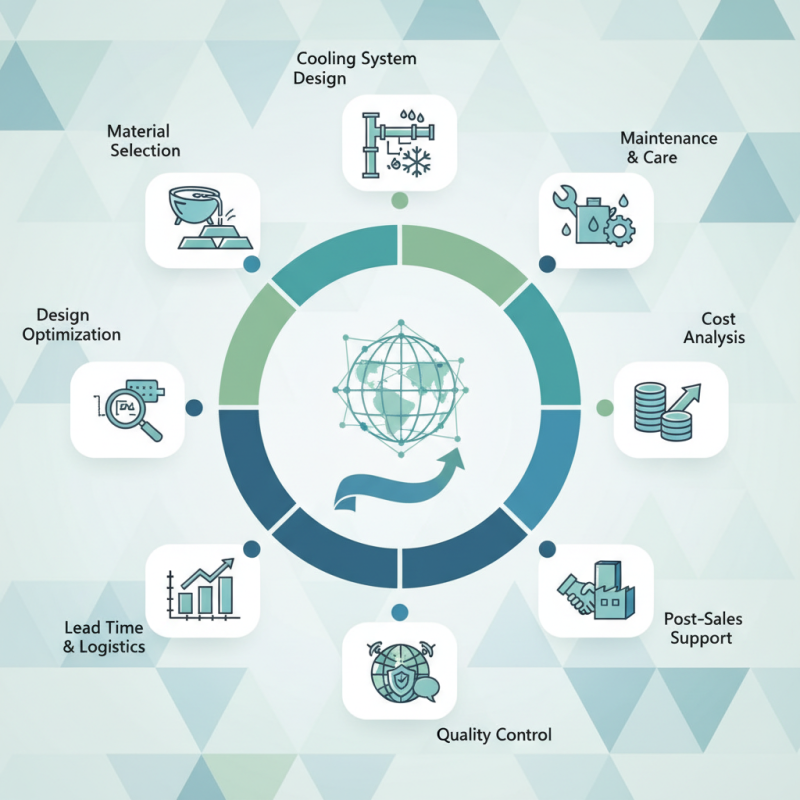
Buyers often overlook key details. These may include material selection, cooling design, and maintenance. Each aspect plays a role in mold performance. Small errors here can lead to larger production issues later. It's important to reflect on past mistakes to avoid repeating them.
In this article, we provide ten essential tips. These tips are rooted in experience and industry knowledge. They aim to guide buyers toward making informed choices. A solid understanding of Die Casting Mold intricacies can promote smoother operations and better outcomes.
Understanding Die Casting Molds: Key Terminology and Concepts
Die casting molds play a crucial role in manufacturing. These molds are essential for producing parts with high dimensional accuracy and surface finish. Understanding key terminology is necessary for successful procurement. Buyer interest has surged due to the global die casting market growing at a CAGR of 5.1%, as reported by industry analysts.
Key terms include "core," "cavity," and "draft angle." The core forms interior features, while the cavity shapes the exterior. A draft angle facilitates easy part removal. Unfortunately, many newcomers overlook these specifics, leading to production delays. According to the International Die Casting Association, improper mold design can increase costs by 20%. Buyers must focus on mold maintenance and lifecycle, as molds can wear out, affecting quality over time.
Material choice is another vital aspect. Molds made from aluminum or steel vary in cost and durability. Aluminum molds, while cheaper, wear out faster. Steel molds last longer but require a larger upfront investment. A survey by the Manufacturing Institute underscores that 42% of businesses struggle with selecting the right material for their projects. Awareness of these details can help buyers avoid pitfalls and create efficient production lines.
Importance of Material Selection in Die Casting Processes
Material selection is crucial in die casting processes. The right materials can enhance strength, improve thermal conductivity, and increase resistance to corrosion. According to a study by the Aluminum Association, about 50% of die-cast products rely on aluminum due to its favorable properties. However, many buyers overlook this aspect, leading to suboptimal performance.
One important tip is to always evaluate your product requirements before choosing materials. Consider factors like the intended use, environmental exposure, and mechanical properties. For instance, if your component requires high durability, magnesium alloys may be a better choice. These materials offer significant strength at low weights, enabling efficient designs.
Consider also how the casting process affects material choice. Certain alloys can only be processed with specific techniques. A report from the American Foundry Society highlights that improper material selection can lead to defects, increasing costs by up to 25%. It’s essential to collaborate with suppliers who understand these nuances. Engage with them early in the design phase to optimize outcomes.
Evaluating Mold Design for Enhanced Production Efficiency
When evaluating mold design, several factors come into play. The shape and size of the mold must suit the intended product. Sometimes, complex designs can hinder efficiency. A simplistic approach often yields better results.
Materials used in the mold construction impact durability. Choosing the right alloy can reduce wear and improve production cycles. However, a balance must be struck between cost and performance. Some buyers may overlook this, leading to increased long-term costs.
Cooling systems also matter in mold design. Efficient cooling leads to shorter cycle times. Insufficient cooling can result in warping or defects. Buyers should analyze their cooling options and test different configurations. In some cases, thorough testing reveals design flaws that are not obvious at first. This iterative process can enhance production efficiency significantly. Always revisit choices and stay open to adjustments.
Top 10 Die Casting Mold Tips for Global Buyers to Consider
Cost Considerations and Budgeting for Die Casting Projects
When budgeting for die casting projects, understanding costs is crucial. A report from the *International Die Casting Association* highlights that nearly 70% of project budgets go towards mold creation and maintenance. This emphasizes the need for careful planning. Buyers should factor in the material costs for molds and the complexity of the design, as intricate molds can significantly increase expenses.
Further analysis suggests that maintenance costs can add another 15-20% to the overall budget. This is often overlooked. Unexpected repairs or replacements can derail project timelines and budgets. Regular inspection and maintenance of molds are essential to avoid these pitfalls. Buyers should be prepared for potential fluctuations in raw material prices. Recent trends indicate that aluminum prices can vary by up to 30% within a year.
Effective cost management is challenging. Many buyers underestimate the budget required for high-quality molds. A focus on upfront costs may lead to cheaper options that compromise quality, resulting in higher long-term expenses. It’s vital for buyers to balance cost and quality, ensuring molds meet the demands of production without excessive investment.
Quality Assurance: Testing and Inspection Techniques in Die Casting
When considering die casting, quality assurance is crucial. Testing and inspection are vital to ensure the integrity of molds and final products. A report by the Die Casting Industry Council states that up to 20% of defects arise from poor mold design or materials. Each defect not only impacts productivity but also increases costs.
Inspection techniques vary, but non-destructive testing (NDT) is gaining traction. Methods like ultrasonic and X-ray inspections can reveal internal flaws without damaging the mold. According to industry data, using NDT can catch up to 90% of potential defects early. This approach enables manufacturers to maintain high standards while reducing waste.
However, the implementation of rigorous testing protocols can present challenges. For instance, training staff to use advanced inspection tools requires time and resources. Many companies struggle with balancing cost and quality, as investment in quality assurance can initially strain budgets. Yet, these investments often yield long-term savings by preventing costly defects and production delays. Continuous improvement in techniques is essential in navigating these complexities.