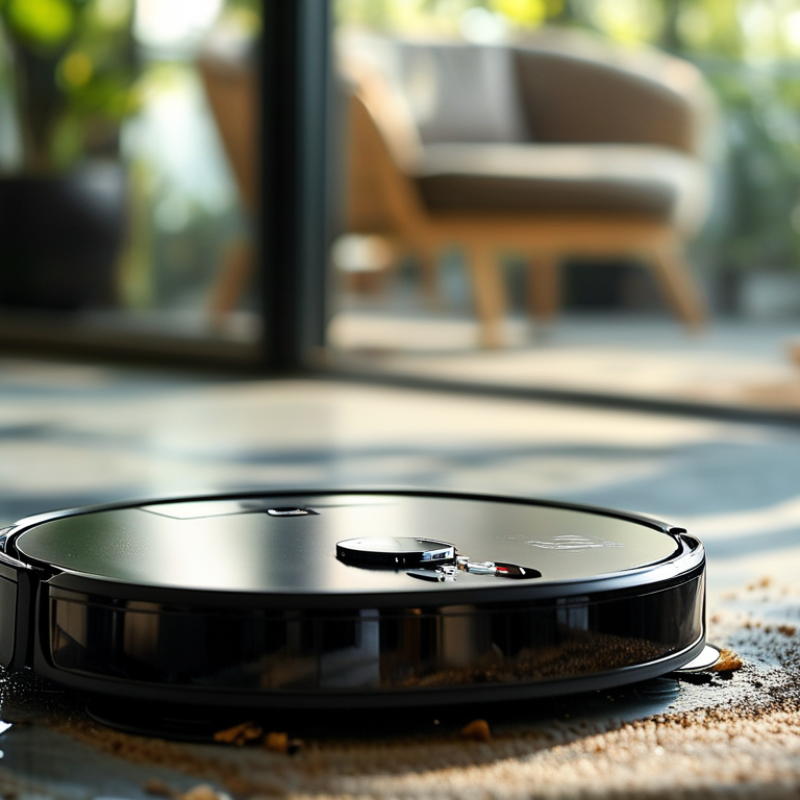
Home robots are moving from novelty products into practical household tools. For global buyers, the best choice depends on living space, daily routines, budget, and local support. A robot vacuum may handle crumbs under a sofa, while a window-cleaning robot faces glass edges, cables, and changing light. Small details matter.
This guide examines the top 10 types of home robots, including floor-cleaning, lawn-mowing, pool-cleaning, window-cleaning, pet-care, kitchen, security, companion, and assistive models. It compares their core functions, useful features, limitations, and typical household applications. Each category deserves careful attention to navigation accuracy, battery life, noise levels, maintenance, and safety controls. Evidence should come from manufacturer documentation, independent testing, and verified customer experiences. Marketing claims can sound impressive. Real performance varies.
Buyers should check regional voltage, replacement-part availability, warranty coverage, and software compatibility before purchasing. Data handling deserves equal attention, especially for robots using cameras, microphones, or cloud services. After-sales support can determine whether a smart device remains useful after one year. An affordable model may become expensive when filters, brushes, batteries, or subscriptions require frequent replacement. No ranking is perfect. Personal priorities still matter. A quiet robot may suit an apartment, while stronger navigation may matter more in a large, crowded home. This overview offers a practical starting point, but thoughtful comparison remains essential before placing an order.
Top 10 Types of Home Robots for Global Buyers
Define 10 Home-Robot Types by Task, Autonomy, and User Setting
A useful comparison starts with work, not appearance. Cleaning robots vacuum or mop floors with scheduled autonomy. Window-cleaning robots handle smooth glass under supervised autonomy. Lawn-care robots trim grass in mapped outdoor areas. Pool-maintenance robots collect debris below water. These four serve repetitive maintenance tasks. They need clear boundaries, obstacle detection, and easy manual recovery. A robot that stops beside a chair is inconvenient, not intelligent.
Care robots support people rather than rooms. Companion robots offer conversation, reminders, or simple games, usually with user-directed autonomy. Telepresence robots let distant users move through a home, requiring remote control and stable connectivity. Pet-care robots dispense food or monitor activity in a controlled setting. Child-focused learning robots provide guided activities, but adult oversight remains essential. Small details matter. Check volume, washable parts, privacy controls, and emergency stop access.
The final three types extend household utility. Security-patrol robots inspect entrances or rooms through scheduled or event-triggered autonomy. Delivery robots carry small items between indoor locations, often following fixed routes. Smart cooking assistants measure, stir, or monitor heat while a person supervises each critical step. User setting changes every choice: apartments need quiet navigation, large homes need longer runtime, and older users may need tactile controls. Buyers should test flooring, lighting, thresholds, and network coverage before purchase. Also verify electrical compatibility, local support, warranty terms, and data policies. Specifications can look convincing. Real homes are messier. That is where many evaluations become imperfect, and a second test is often necessary.
The home robotics market is no longer a futuristic display. The International Federation of Robotics reported over 20 million consumer robots sold globally in 2023. This figure offers a useful scale benchmark for buyers, manufacturers, and distributors. However, sales volume does not automatically prove product quality or customer satisfaction.
The ten major home robot types include floor-cleaning robots, lawn-mowing robots, window-cleaning robots, pool-cleaning robots, security patrol robots, personal assistants, entertainment robots, educational robots, telepresence robots, and pet-care robots. Each category solves a different daily problem. A floor robot may handle dust under a sofa, while a lawn robot needs reliable boundary detection in changing weather. Security models require careful privacy controls, not just attractive cameras. Buyers should compare battery life, navigation accuracy, noise levels, maintenance needs, and local support.
The 20 million figure is impressive. It is not a perfect comparison. Consumer robot definitions may differ across reports, and sales data cannot show how often devices are used after purchase. My practical experience suggests that simple routines often create greater value than complex features. A robot that cleans reliably at 8 a.m. can be more useful than one with impressive but confusing functions. Buyers should also inspect replacement parts, software update policies, and household safety settings before ordering. Technology still needs supervision. That point is easy to overlook.
| Rank | Home Robot Type | Primary Household Task | Typical Navigation / Sensing | Automation Level | Commercial Maturity | Main Buyer Value | Key Buying Considerations |
|---|---|---|---|---|---|---|---|
| 1 | Robot Vacuum and Floor Mop | Vacuuming, sweeping, mopping, and automatic return to the charging dock | LiDAR, cameras, infrared sensors, bump sensors, and floor-cliff detection | High for scheduled floor cleaning; human intervention may be needed for cords and obstacles | Very high | Reduces repetitive daily cleaning work and supports scheduled operation | Navigation accuracy, obstacle avoidance, dust capacity, mopping method, noise, replacement parts, and data privacy |
| 2 | Window-Cleaning Robot | Cleaning smooth glass surfaces on windows and doors | Vacuum or magnetic adhesion, edge detection, and surface-contact sensors | Medium; users normally install the robot, attach safety equipment, and monitor operation | Established niche | Improves access to large or difficult-to-reach glass panels | Glass compatibility, tether safety, edge performance, cleaning-pad maintenance, and performance on framed windows |
| 3 | Robotic Lawn Mower | Routine grass cutting through repeated low-height mowing | Boundary wire or virtual mapping, wheel odometry, GNSS, cameras, and obstacle sensors | High on prepared lawns; perimeter setup and seasonal maintenance remain important | Established niche | Maintains grass regularly while reducing manual mowing time | Slope capability, wet-grass performance, boundary setup, theft protection, blade safety, and battery endurance |
| 4 | Robotic Pool Cleaner | Removing debris and sediment from pool floors and, on some models, walls | Waterproof drive systems, gyroscopes, contact sensors, and programmed coverage patterns | High for routine cleaning; filters must be removed and emptied manually | Established niche | Reduces pool-cleaning labor and helps maintain water clarity | Pool shape, wall and waterline coverage, filtration capacity, cable management, battery charging, and water resistance |
| 5 | Air-Cleaning and UV Sanitizing Robot | Air filtration, air-quality monitoring, and localized sanitizing functions | Air-quality sensors, particulate sensors, room mapping, and fan-speed control | Medium to high for air circulation; sanitizing claims depend on exposure time and room conditions | Established adjacent category | Supports indoor air management, especially in homes with dust or allergy concerns | Verified filtration performance, filter replacement cost, ozone safety, noise, room coverage, and sensor calibration |
| 6 | Home Security and Patrol Robot | Remote visual checks, event detection, patrol routines, and alert notification | Cameras, microphones, motion detection, mapping, and remote communication | Medium; detection and alerts are automated, but interpretation usually requires a person | Developing | Adds mobile monitoring and can help users check pets, rooms, or unexpected activity remotely | Privacy controls, local data processing, low-light performance, alarm integration, connectivity, and false-alert rate |
| 7 | Telepresence and Social Robot | Remote communication, video calling, presence, reminders, and basic interaction | Cameras, microphones, speakers, remote driving, obstacle sensors, and wireless networking | Medium; communication is effective, while autonomous movement is generally limited | Developing | Helps families, caregivers, and remote workers maintain visual contact with a home | Call quality, battery duration, network reliability, camera privacy, accessibility, and ease of remote control |
| 8 | Indoor Delivery and Serving Robot | Moving meals, drinks, small household items, or supplies between predefined locations | LiDAR, cameras, ultrasonic sensors, mapping, and autonomous waypoint navigation | Low to medium in ordinary homes because stairs, clutter, and narrow passages limit operation | Early residential stage | Can reduce routine carrying tasks in accessible, mostly single-level indoor spaces | Payload capacity, turning radius, spill prevention, stair limitations, collision safety, and room-layout adaptability |
| 9 | Assistive and Elder-Care Robot | Reminders, monitoring, simple object assistance, communication, and routine support | Cameras, microphones, vital-sign integrations, voice interfaces, and fall or inactivity detection | Low to medium; most systems assist users rather than provide independent physical care | Early residential stage | Supports independent living and helps caregivers receive timely information | Safety certification, accessibility, emergency escalation, consent, cybersecurity, reliability, and clinical validation |
| 10 | Educational and Coding Robot | Teaching programming, robotics, logic, and problem-solving through interactive projects | Touch, light, sound, infrared, wheel encoders, cameras, and block-based or text-based programming | Medium; educational outcomes depend on guided activities and user participation | Established niche | Provides hands-on STEM learning and encourages creative family activities | Age suitability, curriculum quality, repairability, software support, screen time, safety, and language availability |
Top 10 Types of Home Robots for Global Buyers
Home robots differ sharply in real-world performance. The International Federation of Robotics reported nearly 205,000 professional service robots sold in 2023, up about 30% year on year. However, household buyers need practical metrics, not sales volume. Cleaning robots should be compared by floor coverage, navigation recovery, suction consistency, noise, and battery endurance. A 90-minute claim means less when furniture causes repeated pauses. Real homes are messier than test floors.
Lawn robots need measured cutting area, slope handling, boundary accuracy, rain resistance, and edge performance. Pool robots should show cleaning-cycle length, filtration capacity, waterline coverage, and cable management. Window robots require tested suction stability, glass compatibility, edge detection, and backup protection. The International Energy Agency estimates that buildings consume around 30% of global final energy, making efficient charging and standby use worth checking. Performance claims still vary between laboratories. That weakness matters.
Tips: Request independent test conditions before buying. Check coverage using your own room, lawn, pool, or window size. For homes with pets, prioritize hair pickup and obstacle recovery over headline speed. For outdoor robots, confirm local weather limits and maintenance access. A cheaper unit can become expensive when filters, brushes, or replacement pads are difficult to source.
Home robots now cover security, social interaction, assistance, cooking, delivery, and pet-like companionship. The International Federation of Robotics reported almost 200,000 professional service robots sold in 2023. Transport and logistics applications led demand, according to World Robotics 2024. Home buyers should examine navigation, battery life, noise, repair access, and data protection. A security robot may patrol rooms, detect movement, and send alerts. However, it can miss objects in poor lighting. Buyers need clear privacy controls and local storage options.
Social robots support conversation, reminders, learning, and emotional engagement. Assistive robots can help users carry items or maintain daily routines. The World Health Organization expects the global population aged 60 and older to reach 2.1 billion by 2050. This trend strengthens demand for practical home assistance. Yet, social comfort differs across cultures. Simple speech commands may also fail with accents or household noise. Small weaknesses matter.
Kitchen robots can measure ingredients, stir food, or monitor cooking temperatures. Delivery robots move groceries between rooms, floors, or nearby access points. Pet robots offer movement, sounds, and scheduled interaction without feeding requirements. They are not living animals. That distinction matters. Buyers should compare cleaning needs, replacement parts, language support, and safety certifications. Independent testing is valuable, but reports rarely reflect every home layout. A short trial period remains wise.
Home robots now include floor cleaners, lawn mowers, window cleaners, pool cleaners, security patrol units, and companion devices. The International Federation of Robotics reported about 11.6 million consumer service robots sold globally in 2023. Cleaning robots represented most sales. Yet volume does not prove suitability. Buyers should check ISO 13482 for personal-care robot safety and IEC 60335 requirements for household appliances. Local certification may still differ.
Cost planning needs more than the purchase price.
Add replacement brushes, batteries, filters, software subscriptions, energy, installation, and customs charges. A practical three-year total-cost model is useful. For example, a robot costing 500 dollars may require another 180 dollars in maintenance. Support also affects ROI. The International Federation of Robotics recorded nearly 205,000 professional service robots sold in 2023, showing a growing support challenge. Spare-part availability matters. So does repair time.
Tips:
Request documented testing, warranty terms, language support, and response times before payment. Test mapping around cables, stairs, wet floors, and narrow doorways. Measure saved labor hours for four weeks. Then compare those savings with total ownership costs. Forecasts can be wrong. Household routines change, and a robot may need more supervision than expected. A simple pilot in one room often reveals hidden costs. Safety should outrank novelty.