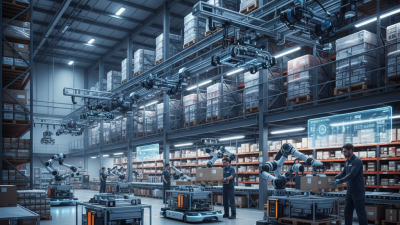
Global demand for material handling robots is moving from experimental projects toward measurable warehouse operations. The International Federation of Robotics reported nearly 541,000 industrial robots installed worldwide in 2023. This figure includes many manufacturing applications, not only logistics. Still, it shows the scale of automation investment.
Warehouse growth is especially visible. Gartner has predicted that more than 75% of commercial supply chain organizations will adopt some form of intralogistics smart robot by 2026. Interact Analysis also continues to track strong expansion in warehouse automation, supported by labor shortages, faster delivery expectations, and rising order complexity. The numbers are persuasive. They are not perfectly comparable, though.
For global buyers, choosing a manufacturer requires more than checking payload and travel speed. A robot may look impressive in a showroom, then struggle with reflective floors, mixed carton sizes, or crowded picking aisles. Real experience matters here. Buyers should examine navigation accuracy, battery behavior, software integration, safety certifications, spare-parts access, and local service coverage. Total cost should include installation, training, downtime, and system upgrades.
This guide reviews leading manufacturers of material handling robots for international purchasing teams. It considers autonomous mobile robots, automated guided vehicles, robotic palletizers, and related warehouse systems. Each category solves a different movement problem. The “best” supplier depends on facility design, product weight, throughput, and workforce structure.
Some rankings remain debatable. Market share data can be incomplete. Vendor claims also need testing. Reliable decisions come from site visits, reference customers, pilot projects, and documented performance metrics—not polished brochures alone.
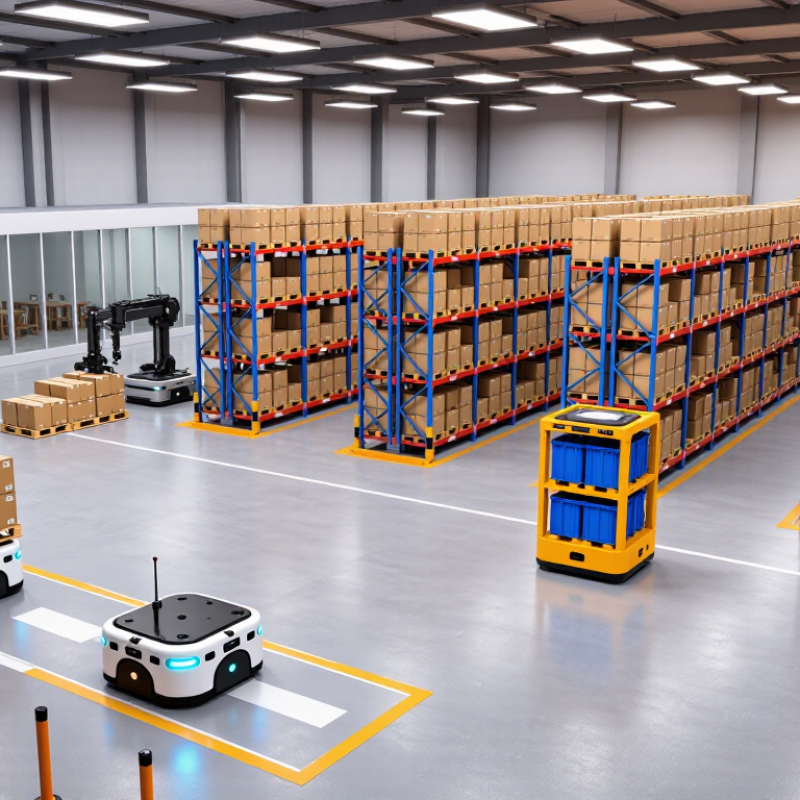
Material handling robots are automated machines that move, lift, sort, or position goods inside warehouses and factories. They reduce repetitive walking, carrying, and pallet movement.
Common types include autonomous mobile robots, automated guided vehicles, robotic arms, and palletizing robots. Each type suits a different workflow.
Mobile robots transport bins across marked or mapped routes. Robotic arms grip cartons, stack cases, or load containers with controlled movement.
Their core functions include picking, palletizing, depalletizing, sorting, and internal transport.
Sensors help robots detect obstacles, package edges, and changing floor conditions. Software connects task orders with inventory systems, while cameras or scanners verify item identity.
In practical deployments, performance depends on payload, battery life, aisle width, floor quality, and human traffic. A robot may move quickly during testing but slow down near workers. That difference matters. No layout is perfect.
Tips:
Measure real travel distances before choosing a robot. Test the heaviest package, not the average one. Check gripping performance with damaged cartons and glossy wrapping.
Keep records of stops, errors, charging time, and operator feedback. Safety checks should cover emergency stops, warning signals, access zones, and maintenance procedures.
A small pilot often reveals problems that a clean simulation hides. It may also show that manual handling remains useful for unusual items.
For global buyers, evaluating material-handling robot manufacturers starts with fit, not brochure claims. The International Federation of Robotics reported 541,302 industrial robots installed worldwide in 2023, up 10 percent from 2022. That growth signals demand, but it does not prove suitability for your site. Ask for tested throughput at your actual pallet weight, aisle width, floor condition, and shift pattern. A robot moving 1,000 totes hourly in a demonstration may slow near dock doors, mixed pallets, or cold storage. Request acceptance-test results, not optimistic averages.
Reliability requires more than rated payload. Check mean time between failures, battery-cycle data, navigation accuracy, spare-part availability, and regional response times. Safety validation should cover people, forklifts, charging areas, and emergency recovery.
Interoperability matters equally. Confirm standards-based interfaces with warehouse-management, enterprise-resource-planning, conveyor, and barcode systems. The MHI 2024 Annual Industry Report identifies technology and innovation as a competitive advantage for 55 percent of supply-chain leaders. Yet integration costs are often underestimated. Compare five-year total ownership costs, including software, training, maintenance, energy, site changes, and downtime. A cheaper unit can become expensive quickly. Forecasts based on perfect utilization also deserve scrutiny.
Tips: Build a site-specific scorecard. Weight safety, uptime, service coverage, cybersecurity, and payback. Request a pilot during peak volume. Interview two customers with similar workflows. Keep an exit plan for data export and hardware replacement.
Top Material Handling Robots Manufacturers for Global Buyers
Leading manufacturers differ by robot category, engineering focus, and deployment experience. Autonomous mobile robot makers typically specialize in fleet software, natural navigation, and warehouse traffic control. Their systems move cartons between storage, picking, and packing zones. Look for clear obstacle detection data, battery performance records, and local service capacity.
Automated guided vehicle manufacturers often provide reliable, repeatable transport along mapped routes. They suit factories with stable layouts and predictable material flows. Autonomous forklift producers focus on pallet movement, rack approach, and safe operation near workers. Robotic arm manufacturers concentrate on palletizing, depalletizing, sorting, and machine tending. Their strongest profiles include accurate end-of-arm tooling, cycle-time testing, and integration support. Specifications can look impressive. Real floors are less forgiving.
Tips: Request a live site reference, not only a product video. Check performance with your pallet sizes, aisle width, floor condition, and shift pattern. Ask who responds during a midnight fault.
Global buyers should also examine manufacturer experience across climate, language, and safety requirements. A dependable supplier explains limitations instead of promising perfect autonomy. I would test barcode variation, emergency stops, Wi-Fi interruptions, and mixed human traffic before signing a large order. These details expose weak assumptions. Certification documents matter, but commissioning records and operator training often reveal more. The best category choice depends on workflow evidence, not popularity.
For global buyers, selecting a material handling robot involves more than payload and travel speed. Compliance must be checked before purchase orders are released. Request a technical file, risk assessment, conformity declaration, and test reports. Confirm which regional requirements apply to the robot, gripper, charger, and safety scanner. Documents should match the exact model and software version. A polished certificate is not enough. Ask who maintains updates when regulations or firmware change.
Integration planning should begin with the warehouse map, not the sales brochure. Measure aisle width, floor tolerance, rack height, Wi-Fi coverage, and pedestrian routes. Define interfaces for warehouse management, fleet control, and emergency stop circuits. Test message timing under peak traffic. Small delays create large queues. Skilled integrators also verify safe speed zones and recovery procedures. One overlooked detail is manual access during power loss. Operators need a clear, practiced method.
Support quality often decides uptime after installation. Global suppliers should provide local response channels, spare-parts guidance, remote diagnostics, and service training. Require escalation times in writing. Ask for preventive maintenance intervals and battery-handling instructions. Translation matters too. Unclear warnings can cause hesitation during a fault. Buyers should run site acceptance tests with real loads, varied pallets, and planned exceptions. This exposes weak assumptions early. Demonstrations can pass while uneven floors still disrupt operations. That uncomfortable finding deserves attention.
| Evaluation Dimension | Relevant Global Requirement or Practice | Evidence Buyers Should Request | Integration and Deployment Considerations | Buyer Priority |
|---|---|---|---|---|
| Robot Safety Design | Industrial mobile robots should be assessed against applicable machinery safety rules, risk-assessment methods, and mobile-robot safety requirements in the destination market. | Declaration of conformity where applicable, risk assessment, safety function documentation, emergency-stop information, and test reports. | Confirm safety zones, obstacle detection, speed limits, personnel interaction procedures, and site-specific validation responsibilities. | Critical |
| Regulatory Documentation | Documentation must match the importing country or region, including applicable electrical, electromagnetic compatibility, machinery, radio, and workplace requirements. | Technical file index, user manual, labels, conformity declarations, component certificates, and country-specific compliance matrix. | Check whether documentation covers the complete system, including charging equipment, software, safety scanners, and optional attachments. | Critical |
| Payload and Load Handling | Rated payload, load-center limits, floor conditions, turning radius, and stability must be defined for the intended operating envelope. | Published technical specifications, payload test conditions, load diagrams, and sample acceptance-test results. | Validate pallet dimensions, rack clearances, floor flatness, ramps, dock interfaces, and the weight distribution of real loads. | High |
| Warehouse Management Integration | Robotic fleet software commonly exchanges missions, status information, locations, and exceptions with warehouse or manufacturing systems through APIs or middleware. | API documentation, supported protocols, data dictionary, sandbox access, cybersecurity controls, and integration references. | Define order orchestration, task priorities, inventory events, blocked-route handling, manual override, and recovery from communication loss. | Critical |
| Fleet Management | A fleet manager should support monitoring, dispatching, traffic control, map management, user permissions, and operational reporting. | Live demonstration, scalability limits, role-based access documentation, alarm history, audit logs, and report samples. | Assess multi-zone routing, mixed robot types, charger allocation, congestion control, and operation across multiple facilities. | High |
| Connectivity and Cybersecurity | Connected robots should be managed according to the buyer’s industrial cybersecurity policies, network segmentation rules, authentication requirements, and patch procedures. | Security architecture, vulnerability-management process, update policy, access-control model, penetration-test summary, and incident-response contacts. | Confirm Wi-Fi coverage, roaming behavior, offline operation, remote access controls, data hosting location, and integration with corporate identity systems. | Critical |
| Localization and Navigation | Navigation performance depends on the sensing method, map design, lighting, reflective surfaces, dust, pedestrian traffic, and environmental changes. | Site survey methodology, navigation accuracy data, environmental limits, mapping workflow, and change-management procedure. | Test narrow aisles, dynamic obstacles, doors, lifts, ramps, low-light areas, reflective wrapping, and frequent layout changes before purchase. | High |
| Battery and Charging | Battery selection, charging method, ventilation, thermal management, transport, and end-of-life handling must comply with applicable electrical and battery rules. | Battery specification, charger certification, charging-cycle data, thermal-safety information, transport documentation, and replacement procedure. | Calculate energy demand from travel distance, payload, shifts, idle time, charging windows, and required operational redundancy. | High |
| Environmental Suitability | Operating temperature, humidity, dust, water exposure, floor contamination, and cleanroom or food-contact requirements must be matched to the facility. | Environmental rating, ingress-protection information where applicable, operating limits, material declarations, and cleaning instructions. | Verify performance in cold storage, washdown areas, high-dust zones, temperature transitions, and hygiene-controlled environments. | High |
| Installation and Commissioning | Successful deployment requires site surveys, workflow design, safety validation, network preparation, operator training, and documented acceptance testing. | Statement of work, commissioning plan, responsibility matrix, training agenda, acceptance criteria, and go-live support schedule. | Separate supplier, integrator, facility, and IT responsibilities, including construction changes, floor markings, network access, and system interfaces. | Critical |
| After-Sales Service | Service capability should cover preventive maintenance, corrective repairs, spare parts, software support, remote diagnostics, and escalation management. | Service-level agreement, response and restoration targets, technician coverage, spare-parts list, escalation path, and maintenance schedule. | Check local service availability, time-zone coverage, language support, remote-access approval process, and contingency plans for critical failures. | Critical |
| Spare Parts and Lifecycle | Long-term availability of wear parts, batteries, sensors, drive components, and software support affects total cost and operational continuity. | Parts availability statement, product lifecycle policy, obsolescence notice period, recommended stock list, and repairability information. | Model replacement lead times, compatibility of future software and hardware, battery replacement intervals, and local inventory requirements. | High |
| Performance Measurement | Performance should be measured using site-specific indicators rather than headline speed alone. | Reference test methodology, throughput assumptions, task-completion rate, availability data, mean time between failures, and recovery-time data. | Define baseline and target values for completed moves per hour, utilization, queue time, charging downtime, exceptions, and system availability. | High |
| Commercial and Total Cost | The economic evaluation should include equipment, software, integration, installation, training, maintenance, energy, spare parts, and future expansion. | Itemized quotation, licensing model, implementation fees, warranty terms, support fees, consumables, and five-year total-cost assumptions. | Compare purchase, rental, and robotics-as-a-service models using the same throughput, uptime, staffing, and expansion assumptions. | High |
Selecting the right material handling robot manufacturer requires more than comparing payloads and prices. IFR’s World Robotics 2024 report recorded 541,302 industrial robot installations worldwide in 2023. This scale shows strong adoption, but it does not guarantee suitability for your warehouse. Ask the manufacturer to test your actual cartons, pallets, floor conditions, and peak order volumes.
Technical evidence matters. MHI’s 2024 Annual Industry Report found that 55% of supply chain leaders planned to increase technology investment. A capable manufacturer should explain integration with warehouse software, safety controls, maintenance access, and operator training. Request documented cycle-time tests, uptime definitions, spare-parts availability, and customer references from similar facilities. Marketing slides are not enough.
Watch the handoff.
During site visits, observe how the robot handles damaged packaging, uneven loads, and sudden congestion. Ask who owns troubleshooting after installation. A manufacturer with regional service engineers may reduce downtime, but response promises should appear in the contract. Check cybersecurity procedures and compliance with applicable machinery and workplace-safety requirements. No scorecard is perfect. I would leave room for uncertainty, especially when projected labor savings depend on unusually stable demand. A small pilot, measured over several weeks, can expose routing errors, operator confusion, and maintenance delays before a full deployment.