Top Material Handling Robots for 2026 What Buyers Need to Know?
As industries evolve, material handling robots are becoming essential in warehouse operations. These automated solutions enhance efficiency and accuracy, making them vital for businesses. In 2026, choosing the right material handling robots will be crucial for maintaining competitiveness in a fast-paced market.
Buyers need to understand various factors influencing their decisions. From load capacity to navigation systems, each detail matters. Many companies still struggle with outdated methods. Some might hesitate to adopt new technologies due to initial costs. However, the long-term benefits of integrating advanced robots can outweigh the initial investment.
Investing in the right material handling robots could mean the difference between success and stagnation. Understanding the latest advancements helps buyers make informed choices. It's essential to weigh your options carefully and consider future needs. This approach will ensure that the chosen robots align with operational goals, ultimately contributing to growth and efficiency.
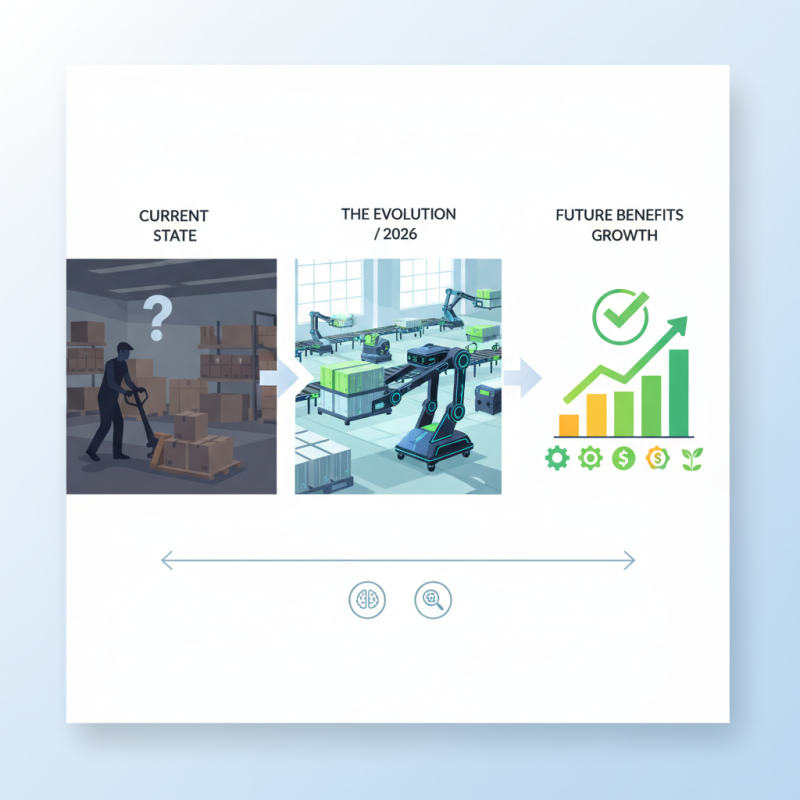
Key Features to Consider in Material Handling Robots for 2026
When selecting material handling robots for 2026, several key features merit attention. The robots should be equipped with advanced sensors. These sensors enhance navigation and obstacle detection. Look for models that support both indoor and outdoor functions. Versatility can maximize operational efficiency.
Connectivity is another important aspect. Robots that integrate smoothly with inventory management systems offer significant advantages. Real-time data exchange streamlines workflows. This results in faster decision-making. Furthermore, consider robots with self-learning capabilities. They can adapt to changing environments and tasks.
Battery life plays a critical role in overall performance. Long-lasting batteries reduce downtime and maintenance costs. Additionally, evaluate the support and training provided by the manufacturer. Effective onboarding can ease the transition for staff. Finally, reflect on the robot's scalability. As your needs evolve, the robot should be able to scale up. This flexibility ensures that your investment remains relevant.
Top Material Handling Robots for 2026
This chart illustrates the projected market growth and key features of material handling robots for the year 2026. The data reflects rising demand for automation in the logistics and supply chain sectors.
Emerging Technologies Shaping Future Material Handling Robotics
Emerging technologies are transforming material handling robotics. Automation enhances efficiency in warehouses and factories. According to a recent report by the International Federation of Robotics, the market is projected to grow by over 15% annually through 2026. This surge is driven by innovations in artificial intelligence and machine learning.
Robots equipped with advanced sensors can now navigate complex environments. They learn from their surroundings, adapting to new obstacles. Flexibility in design allows them to handle various materials, from pallets to delicate items. However, challenges remain. Integrating these systems with existing infrastructure can be complex and costly for many businesses.
Additionally, safety concerns are paramount. As robots become more autonomous, ensuring safe human-robot collaboration is crucial. Ongoing training and monitoring can help mitigate risks. Embracing these emerging technologies requires careful planning. While the promise of enhanced productivity is clear, the path to implementation involves thoughtful consideration of potential pitfalls.
Market Trends and Predictions for Material Handling Robots in 2026
The material handling robot market is expected to experience substantial growth by 2026, driven by advancements in automation technology. Recent industry reports suggest that the market will reach approximately $24 billion by then. Increased demand for efficiency and accuracy in logistics will shape this trend. Companies are increasingly recognizing the need for robots that can perform tasks previously managed by human workers.
Automation can enhance productivity, but it also brings challenges. Many organizations struggle with the integration of robotics into existing systems. Understanding how to effectively train staff to work alongside these machines is crucial. A study indicated that 70% of companies face hurdles when adopting robotic systems due to inadequate training.
Tips: Focus on evaluating your current workflows. Determine which processes can benefit most from automation. Research compatible technologies before making significant investments. Early planning can lead to better outcomes.
The predictive analytics market will grow alongside material handling robots. This technology allows for real-time monitoring and decision-making. Organizations can leverage data to optimize their operations. It's essential to remain aware of potential risks with over-reliance on automation. Balancing human and robotic labor is vital for sustainable growth.
Top Manufacturers and Their Innovations in Material Handling Robotics
The advancements in material handling robotics have captured the attention of industries worldwide. Leading manufacturers are focusing on innovations that improve efficiency and safety in warehouses and factories. These advancements include autonomous mobile robots (AMRs) that navigate complex environments. They utilize advanced sensors and AI to perform tasks with precision, reducing the need for human intervention.
Many companies have embraced modular designs. This allows customization for various applications. Modular systems offer flexibility, enabling businesses to adapt to changing demands swiftly. However, these innovations come with challenges. Integration with existing systems can be complex and costly. Training staff to operate new technology also requires time and resources.
Some manufacturers are exploring collaborative robots, or cobots, which work alongside humans. These robots are designed with safety features to minimize accidents. However, reliance on these systems raises concerns about job displacement. Striking the right balance between automation and human labor is crucial. The path forward involves ongoing dialogue about the ethical implications of using advanced robotics in the workplace.
Top Material Handling Robots for 2026: What Buyers Need to Know
| Robot Model |
Load Capacity (kg) |
Battery Life (hours) |
Max Speed (m/s) |
Key Features |
| Model A |
1000 |
8 |
1.5 |
Autonomous navigation, obstacle detection |
| Model B |
800 |
10 |
1.2 |
Smart charging, real-time monitoring |
| Model C |
1200 |
6 |
2.0 |
Multi-tasking capabilities, user-friendly interface |
| Model D |
700 |
12 |
1.0 |
High precision lifting, customizable attachments |
Cost Considerations and Budgeting for Material Handling Robots in 2026
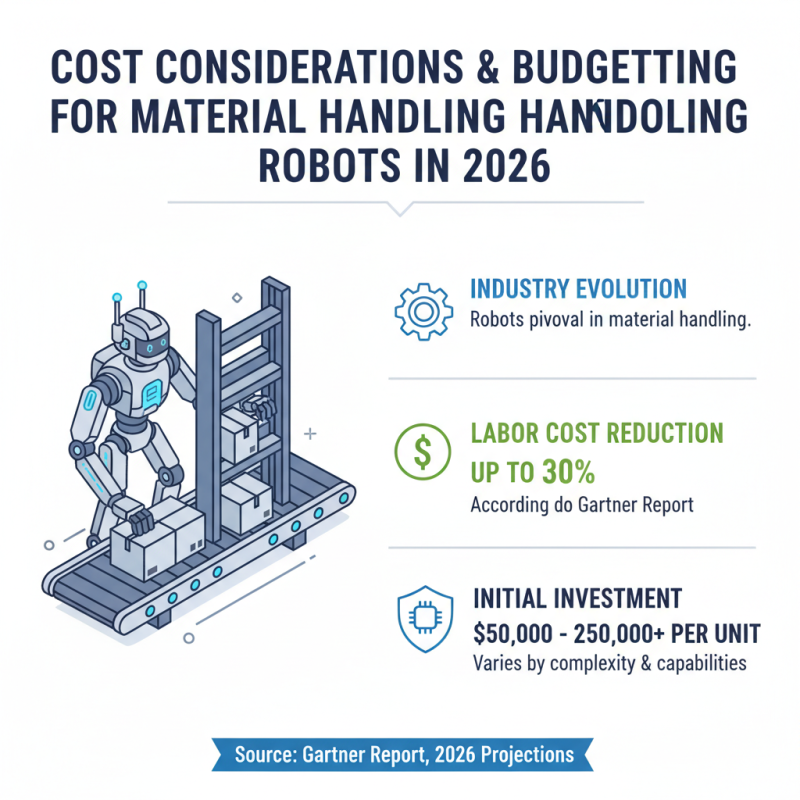
In 2026, the material handling industry will continue to evolve, with robots playing a pivotal role. As buyers consider investing in these technologies, understanding cost implications is crucial. A report from Gartner indicates that automation adoption can reduce labor costs by up to 30%. However, the initial investment can be significant, often ranging from $50,000 to over $250,000 per unit depending on the complexity and capabilities.
Budgeting for material handling robots involves more than just purchase price. Ongoing maintenance, training, and potential integration into existing systems can add to overall expenses. According to a study by McKinsey, companies often underestimate these added costs by nearly 20%. Proper budgeting must include these factors to avoid financial strain.
**Tip**: Always conduct a cost-benefit analysis. Assess not just the sticker price but also the long-term savings and efficiencies.
Another consideration is the ROI timeline. Research shows it can take 1 to 4 years to see significant returns. Buyers should factor in this timeline when planning budgets. Varying production demands can also affect calculations. Being conservative in forecasts helps to avoid surprises later on.
**Tip**: Reach out to experts for tailored insights. Their expertise can illuminate potential pitfalls in your unique context.