China has become a major base for robotic automation process development, combining component supply, engineering talent, and large-scale manufacturing experience. Yet choosing a manufacturer requires more than comparing catalog prices. A reliable partner should understand your production rhythm, product variation, safety requirements, and maintenance capacity.
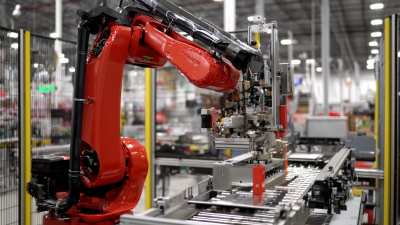
Rodney Brooks, a respected roboticist and founder of Rethink Robotics, said, “The biggest challenge in robotics is not the hardware, but the software.” This observation remains highly practical. A robot arm may look impressive under showroom lighting. However, the real test happens beside a conveyor belt, where dust, vibration, changing materials, and rushed operators expose weak integration. Strong manufacturers connect robots with vision systems, PLC controls, grippers, sensors, and traceability software. They also document testing procedures and provide measurable cycle-time data.
This guide examines China’s top robotic automation process manufacturers through a practical lens. It considers technical experience, engineering support, customization, quality control, certifications, and after-sales service. Some suppliers excel in welding. Others perform better in assembly, packaging, palletizing, or machine tending. The “best” choice is rarely universal. That is an uncomfortable point, but it matters.
A low quote can hide expensive integration work. A famous brand can still offer poor communication. Buyers should request factory references, sample layouts, risk assessments, and clear acceptance standards. They should also ask who will repair the system after installation. Those details reveal reliability more clearly than polished brochures. This overview is designed to help manufacturers compare capabilities carefully and avoid selecting automation based only on appearance, price, or promises.
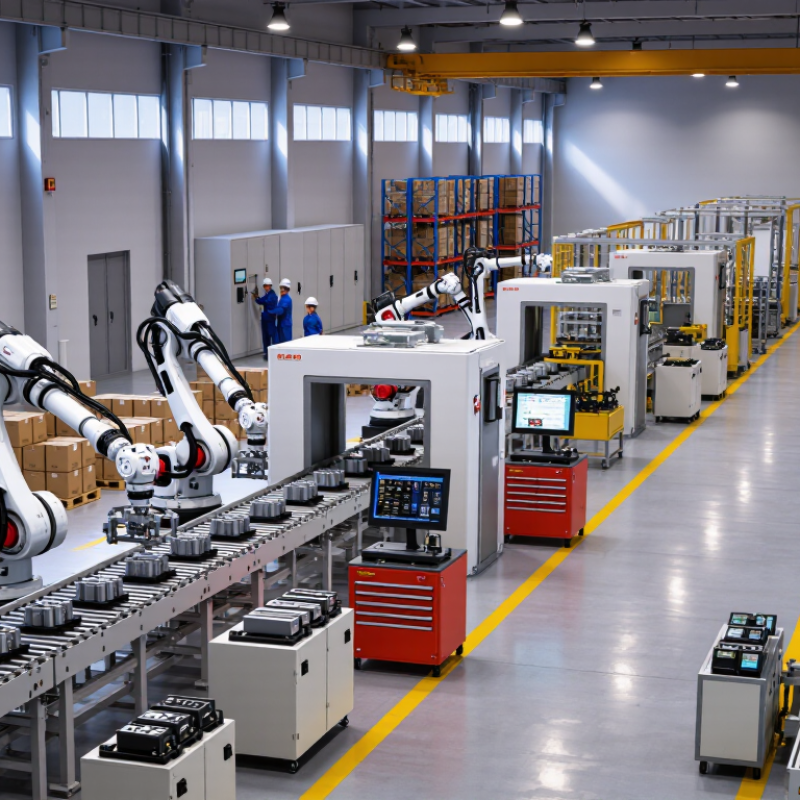
A robotic automation process manufacturer does more than assemble robots and conveyors. It designs a complete production method around real factory conditions. This includes material flow, cycle time, operator movement, machine interfaces, and maintenance access. Experienced manufacturers study the process before proposing equipment. They may inspect samples, review production data, and test difficult parts. That practical work often reveals problems hidden in a simple specification.
Technical depth is another defining quality. A capable manufacturer can integrate robots, sensors, vision systems, programmable controls, and safety devices into one stable cell. It should explain why each component is selected. Clear drawings, risk assessments, wiring records, and operating instructions matter. So does testing. Factory acceptance trials should measure cycle time, repeatability, fault recovery, and product quality. Small details count. A loose cable can stop a line.
Reliability also depends on honest communication. A responsible supplier states its limits instead of promising perfect automation. It discusses spare parts, software access, training, and response times before installation. Site acceptance testing should reflect actual production conditions, not an ideal demonstration. No manufacturer gets every design decision right. Unexpected vibration, inconsistent materials, or operator habits may expose weaknesses. The strongest companies document these lessons and improve the process. For buyers comparing China’s robotic automation process manufacturers, evidence is more valuable than impressive claims. Look for verified experience, measurable results, and support that continues after commissioning.
China Top Robotic Automation Process Manufacturers?
China’s robotic automation manufacturing industry has changed sharply since the early 2000s. Early factories often depended on imported controllers, motors, and precision sensors. Local manufacturers gradually built stronger engineering teams and broader component networks. Today, many factories produce robotic arms, welding systems, packaging units, and inspection equipment.
The development was not only technological. Demand from electronics, automobiles, logistics, and medical manufacturing pushed faster improvement. Local suppliers now combine mechanical design, machine vision, software control, and after-sales support. In real production lines, an arm may sort small parts beside a conveyor, while sensors check position every few milliseconds. However, progress is uneven. Some systems perform well in demonstrations but struggle with dust, vibration, or frequent product changes. This gap deserves honest attention.
Tips: Check the complete process, not only the robot. Ask for cycle-time records, accuracy data, safety documentation, and factory references. Test sample materials before signing a large order. Confirm spare-part availability and technician response times. A lower purchase price may bring higher integration costs. Also, review software compatibility carefully. Small communication errors can stop an entire line. Practical trials reveal weaknesses that brochures often hide.
| Development Period | Industrial Robot Installations in China | Manufacturing Development | Main Automation Applications | Industry Significance | Reference |
|---|---|---|---|---|---|
| 2015 | Approximately 68,000 units installed | Early large-scale adoption of imported and locally integrated robotic systems | Automotive welding, handling, painting and basic assembly | Marked the beginning of rapid expansion in industrial robot demand | International Federation of Robotics, World Robotics historical statistics |
| 2016–2017 | Approximately 87,000 units in 2016 and 138,000 units in 2017 | Rapid growth in system integration, robot body production and component localization | Automotive, electronics, metal processing, logistics and consumer-product assembly | Automation moved from single-machine deployment toward complete production cells | International Federation of Robotics, World Robotics reports |
| 2018–2019 | Approximately 154,000 units in 2018 and 141,000 units in 2019 | Market growth temporarily slowed as industrial investment and export manufacturing weakened | Welding, machine tending, palletizing, screwdriving and quality inspection | Manufacturers began emphasizing total cost of ownership, reliability and service coverage | International Federation of Robotics, World Robotics reports |
| 2020 | Approximately 168,000 units installed | Automation investment accelerated because of labor constraints, health restrictions and supply-chain pressure | Disinfection, packaging, warehousing, machine tending and contactless production | Robotic automation became a resilience tool rather than only a productivity tool | International Federation of Robotics, World Robotics 2021 |
| 2021 | Approximately 268,000 units installed | Strong expansion in electric vehicles, batteries, electronics and general manufacturing | Battery handling, welding, dispensing, inspection, assembly and intralogistics | China became the world’s largest annual market for industrial robot installations | International Federation of Robotics, World Robotics 2022 |
| 2022 | Approximately 290,000 units installed | Industrial robot stock exceeded 1.5 million units, supported by smart-factory investment | Automotive, electronics, metals, plastics, food processing and warehousing | Deployment broadened beyond automotive into diversified manufacturing sectors | International Federation of Robotics, World Robotics 2023 |
| 2023 | Approximately 276,000 units installed | Demand remained high while customers focused more strongly on integration quality and payback period | Assembly, welding, material handling, packaging, inspection and collaborative workstations | China accounted for more than half of global annual industrial robot installations | International Federation of Robotics, World Robotics 2024 |
| 2024 and beyond | Continued high-volume deployment; exact totals depend on the latest annual industry survey | Growth is increasingly connected with artificial intelligence, machine vision, digital twins and flexible production | Adaptive assembly, autonomous intralogistics, visual inspection, welding and high-mix production | The market is shifting from robot-unit sales toward complete automation solutions and lifecycle services | Industry direction based on national manufacturing policy documents and IFR market analysis |
| Evaluation Dimension | Manufacturing Capability to Examine | Typical Technical Indicators | Why It Matters When Selecting a Chinese Automation Manufacturer |
|---|---|---|---|
| Robot Platform | Availability of articulated, SCARA, delta, Cartesian and collaborative robot platforms | Payload, reach, repeatability, operating speed and allowable installation orientation | Confirms whether the manufacturer can match the robot architecture to the production task |
| System Integration | Ability to design complete robotic cells rather than supply a standalone robot | Fixtures, grippers, conveyors, safety systems, PLC communication and end-of-line testing | Reduces integration risk and improves responsibility for commissioning and production acceptance |
| Core Components | Control cabinets, servo systems, reducers, drives, vision equipment and end effectors | Component compatibility, local serviceability, replacement lead time and life-cycle support | Component availability directly influences downtime, maintenance cost and delivery reliability |
| Application Experience | Experience in automotive, electronics, metalworking, batteries, logistics, food and plastics | Validated cycle time, process capability, defect rate and documented reference applications | Industry-specific process knowledge is often more important than robot specifications alone |
| Software and Connectivity | Robot programming, production monitoring and connection with factory information systems | Industrial Ethernet, OPC UA, traceability, remote diagnostics and data logging | Connectivity supports predictive maintenance, production transparency and flexible scheduling |
| Safety and Compliance | Risk assessment, guarding, emergency systems and collaborative-operation design | Applicable ISO 10218 and ISO/TS 15066 requirements, safety validation and CE-related documentation where required | Proper compliance reduces operational risk and supports international project acceptance |
| Delivery and Commissioning | Engineering resources, factory acceptance testing and installation capability | Project schedule, FAT/SAT process, training, spare parts and response time | Strong execution capability determines whether the system reaches the planned production rate |
| Total Cost of Ownership | Purchase price combined with installation, energy, maintenance and replacement costs | Estimated payback period, annual service cost, energy consumption and mean time between failures | The lowest initial quotation does not necessarily provide the lowest long-term operating cost |
China’s robotic automation manufacturers typically fall into four practical groups. Robot makers develop articulated, delta, or collaborative platforms for repetitive movement. Their core strengths include motion control, payload design, safety functions, and software integration. System integrators combine robots with conveyors, vision cameras, grippers, and production databases. They are valuable when a factory needs one coordinated cell rather than separate machines. Custom machine builders focus on special processes, such as screwdriving, dispensing, welding, or inspection. Component specialists supply servo drives, sensors, end effectors, and control cabinets. Each type solves a different engineering problem.
Strong manufacturers provide more than attractive cycle-time figures. They should explain accuracy, maintenance intervals, spare-part access, and operator training. Factory acceptance tests can reveal missed handoff points, unstable sensors, or awkward cleaning areas. Details matter. Ask for sample programs, risk assessments, wiring drawings, and production data from comparable projects. A reliable supplier also documents installation changes instead of hiding them. In practice, no manufacturer excels at every layer. Some have excellent mechanical design but weak software support. Others integrate quickly but depend on imported components with longer lead times. That gap matters. Buyers should inspect a working cell, test real materials, and measure output under realistic conditions. Clear communication, traceable revisions, and responsive service often determine whether an automated line performs well after commissioning.
China Top Robotic Automation Process Manufacturers?
Robotic automation manufacturers in China are developing systems for welding, assembly, palletizing, inspection, and material handling. Their strongest solutions combine industrial robots, machine vision, programmable logic controllers, and real-time production data. A welding cell may use vision guidance to locate uneven metal parts, while force sensors control pressure during fitting. Small details matter. A misplaced cable can stop a complete line.
In automotive and metalworking plants, robotic arms repeat precise movements across long shifts. In electronics production, compact robots handle delicate components under controlled conditions. Food and pharmaceutical facilities often require stainless-steel structures, easy cleaning, and traceable operating records. Engineers should examine cycle time, payload, reach, safety functions, and maintenance access before selecting a process manufacturer. Factory acceptance tests, sample runs, and operator training reveal weaknesses that brochures rarely show.
Reliable suppliers also provide simulation, integration, spare parts, and remote diagnostics. However, automation projects do not always perform as predicted. I have seen factories underestimate product variation and overestimate operator readiness. The robot was accurate, but the feeding system was inconsistent. Better projects measure real materials, real speeds, and real human workflows before final installation. Cost is important, but recovery time after a fault may matter more. A practical supplier explains these limitations instead of promising perfect operation.
Selecting a Chinese robotic automation manufacturer requires more than comparing quotations. Start with your process data: cycle time, payload, product tolerance, floor space, and expected annual volume. A capable supplier should explain its calculations clearly, not promise effortless results. Request videos of similar systems, but verify whether the applications match your materials and production speed.
Visit the factory when possible. Examine wiring quality, safety guarding, spare-parts storage, and software documentation. Ask for a factory acceptance test with measurable standards, such as repeatability, cycle time, changeover duration, and alarm recovery. Engineers should provide risk assessments and comply with applicable safety requirements. Check their experience through customer references, project records, and the qualifications of the technical team. A low price may hide weak integration or expensive maintenance later.
Tips: Create a written evaluation sheet before supplier meetings. Score engineering depth, communication, testing, training, service response, and total ownership cost. Confirm who owns the program code and who supports remote troubleshooting. Ask how they handle defective components and delayed shipments. Some evaluations fail because buyers trust polished demonstrations too quickly. Leave room for doubt. A small pilot cell can reveal problems that a presentation will not show.