2026 Best Robot Types How to Define a Robot?
To define robot in 2026, we need more than a machine with wheels, cameras, or a human-like shape. ISO 8373 describes a robot as an actuated mechanism with programmable motion and some degree of autonomy. That definition includes factory arms, warehouse mobile robots, surgical systems, and agricultural machines. It does not automatically include every smart appliance. A voice assistant may process commands, yet it cannot physically act in the world.
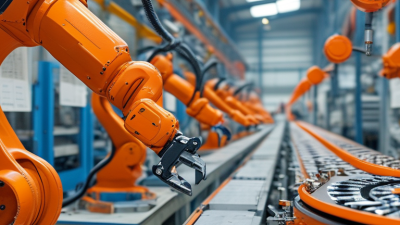
The numbers show why this distinction matters. The International Federation of Robotics reported 541,302 industrial robot installations worldwide in 2023. It also recorded more than 4.28 million industrial robots operating globally. These machines repeat precise tasks beside workers, often welding, lifting, painting, or assembling small components. IFR’s World Robotics 2024 service-robot data also identified logistics as a leading professional application. A warehouse robot can follow mapped routes, avoid obstacles, and deliver a tote to a picking station. The details matter.
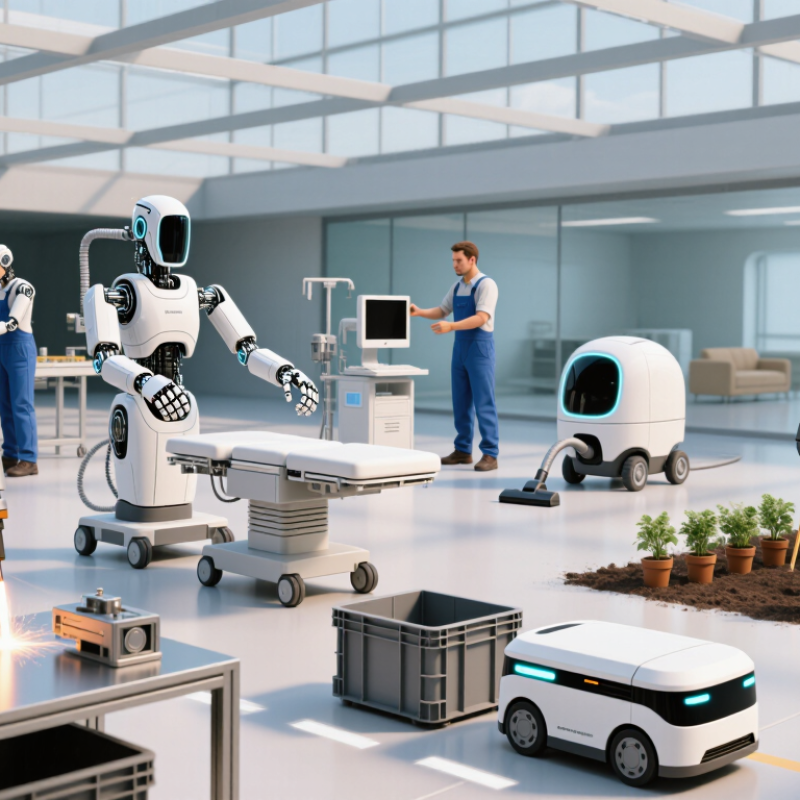
Not every robot works in a factory. Autonomous mobile robots move inventory. Medical robots support controlled procedures. Agricultural robots inspect crops, remove weeds, or monitor soil conditions. Domestic robots clean floors and manage simple household routines. Collaborative robots share workspaces with people, but their safety depends on sensors, software, training, and risk assessment. Categories overlap. The boundary remains imperfect. A machine may be autonomous in movement but limited in decision-making. This article compares the best robot types for 2026 through capability, environment, safety, cost, and practical value. Readers should question impressive demonstrations, because a successful laboratory trial does not guarantee reliable performance in a busy workplace.
What Is a Robot? ISO 8373 Defines Autonomy, Sensing, and Reprogrammability
2026 Best Robot Types: How to Define a Robot?
ISO 8373 offers a practical way to identify a robot. It describes a robot as a programmable, actuated mechanism that performs tasks with some degree of autonomy. The machine may move, manipulate objects, or position tools. Autonomy matters because the robot can respond to its current state and sensor data without constant human commands. Sensing may include cameras, force sensors, distance readings, or touch feedback. Reprogrammability also separates many robots from fixed-purpose machines. Their task logic can change through software or other programming methods.
This definition helps classify industrial, mobile, collaborative, and service robots. Yet the boundary is not always clean. A sensor-rich machine may still be ordinary automated equipment. In practical testing, I would check three points: Can it sense relevant conditions? Can it make limited decisions? Can its behavior be reprogrammed? If one answer is unclear, the classification deserves caution. Technology moves faster than terminology.
Tips: Describe the robot’s task, movement, sensors, and decision process. Avoid calling every automated device a robot. Record the software changes and human interventions during testing. Small details often reveal whether autonomy is real or merely advertised. Be precise.
How Robots Work: Sensors, Controllers, Actuators, and Software
A robot is a machine that senses its surroundings, processes information, and performs physical actions. Its type depends on its task, movement, and level of autonomy. A mobile robot may use wheels, while a robotic arm stays fixed and handles objects with precision. The body matters, but the internal system matters more.
Sensors provide the robot’s view of the world. Cameras detect shapes, distance sensors measure obstacles, and force sensors reveal contact pressure. A controller interprets these signals and selects the next action. Software supplies the rules, maps, and learning models behind each decision. Actuators then create movement through motors, gears, pumps, or joints. In a warehouse test, a small sensor error can make a robot stop several centimeters too early. That detail is easy to miss.
Good engineering connects these parts carefully. Sensor data must arrive quickly. Controllers need predictable timing. Actuators require enough power without overheating. Software should also handle uncertainty, because real floors are uneven and objects rarely sit perfectly. Robots are not truly intelligent in every situation. They follow designed goals, measured inputs, and programmed limits. A system may perform impressively in a controlled room, then struggle under glare, dust, or unexpected movement. I would not call that failure alone. It shows where testing remains incomplete. Reliable evaluation should record errors, repeat trials, and include safe human oversight.
2026 Best Robot Types: How to Define a Robot?
A robot is a programmable machine that uses sensors to perceive conditions, a controller and software to make decisions, and actuators to produce movement. The chart compares representative axis counts across common robot mechanisms.
Axis count indicates the number of independently controlled movements in a typical configuration. Cartesian robots commonly use three linear axes, SCARA robots four axes, delta robots four axes, and articulated robots six axes. Humanoid robots generally have more than 20 independently controlled joints.
Which Robot Types Exist? IFR Separates Industrial and Service Robots
How to Define a Robot in 2026
A robot is a programmable machine that senses conditions, processes information, and performs actions. The definition sounds simple, but real machines often sit between categories. The International Federation of Robotics, or IFR, separates robots into industrial and service types. This distinction helps users compare safety needs, operating environments, and practical value.
Industrial robots
usually work in controlled production areas. They may weld metal frames, move heavy components, or place products into cartons. A robotic arm can repeat the same path thousands of times, with steady speed and measured force. In my experience, the biggest benefit is often consistency, not speed. Yet installation, training, and maintenance can require more planning than expected.
Service robots
support people or professional operations outside traditional manufacturing. Professional examples include mobile systems for logistics, inspection, cleaning, and medical assistance. Personal service robots may help with household tasks or basic indoor navigation. They must handle changing floors, lighting, people, and unexpected objects. That makes their performance less predictable. Sometimes, a robot completes a task but still needs human supervision. This weakness matters.
IFR classifications offer a reliable reference, but they cannot describe every emerging design perfectly. A mobile machine may serve a factory while also behaving like a service robot. For buyers, the operating task should guide the choice. Ask what the robot senses, what it controls, and who remains responsible. A clear definition begins there.
Why 2026 Matters: IFR Recorded 542,000 Industrial Robot Installations in 2023
2026 Best Robot Types: How to Define a Robot?
The International Federation of Robotics recorded 542,000 industrial robot installations worldwide in 2023. That figure makes 2026 more than a futuristic date. It reflects a continuing shift toward automated production, inspection, handling, and assembly.
A robot is usually a programmable machine that senses conditions, processes instructions, and performs physical actions. Industrial arms suit welding and component placement. Mobile robots move materials across warehouses. Collaborative robots assist workers near shared work areas, when risk controls are properly designed. Service robots support cleaning, delivery, healthcare, and public tasks.
The best robot type depends on the work, not the most impressive specification.
Consider payload, reach, speed, accuracy, floor layout, maintenance skills, and operator safety. A camera-guided arm may handle changing products better than a fixed tool. An autonomous mobile unit may reduce walking time, yet require careful route testing. In practice, definitions overlap. That is important. A machine can be mobile, collaborative, and vision-enabled at once. I have found that early projects sometimes measure motion, but overlook downtime and training.
Tips:
Define the task in one sentence. Record cycle time before automation. Test unusual loads and poor lighting. Ask operators what slows them down. Keep a manual fallback during trials. Review safety requirements with qualified professionals, because a fast robot is not automatically a useful robot. Also, do not treat 542,000 installations as a promise of identical results. Local skills, processes, and evidence still decide performance.
How to Choose the Best Robot: Compare Payload, Reach, Mobility, and Safety
Choosing the best robot in 2026 starts with the task, not the machine.
Payload means more than rated weight. Calculate the gripper, cables, product, and acceleration forces. A robot carrying 10 kilograms may need a larger margin during fast movements.
The International Federation of Robotics reported 541,302 industrial robot installations worldwide in 2023.
That scale shows strong demand, but it does not make every robot suitable for every line.
Reach must match the real workspace.
Measure the farthest pick point, fixture height, and wrist angle. A longer arm can reduce repositioning, yet it may sacrifice stiffness and accuracy.
Mobility changes the decision again. Fixed robots suit repeatable cells, while mobile platforms help when work locations change.
However, uneven floors, narrow aisles, and battery charging can reduce practical availability.
The International Federation of Robotics, World Robotics 2024, highlights the continuing expansion of automation across manufacturing sectors.
Safety should be assessed before speed.
Review stopping distances, pinch points, guarding, sensing, and human access.
ISO 10218 and ISO/TS 15066 provide important guidance for industrial and collaborative robot applications.
Risk assessment remains site-specific. A report cannot replace it.
In deployment reviews, teams sometimes overestimate payload and underestimate reach interference. That mistake is expensive.
I would test the robot with real tooling, cold starts, emergency stops, and the heaviest product.
A spreadsheet helps. It is not the whole answer.