How to Choose the Right Robot Technology for Your Business?
Choosing the right robot technology can reshape daily operations, but the decision rarely begins with a machine. It begins with a clear business problem. A warehouse may need faster picking, while a clinic may need safer transport. A factory may need consistent welding, not simply a more advanced robot.
Real-world experience shows that impressive demonstrations can hide practical weaknesses. A robot may move quickly in a showroom, yet struggle beside crowded workstations. Dust, uneven floors, changing product sizes, and staff training can affect performance. These details deserve careful testing. They also reveal whether automation supports people or creates unnecessary complexity.
A reliable evaluation should examine safety, integration, maintenance, data security, and total operating costs. Speak with engineers, operators, and independent technology specialists. Ask vendors for measurable results from similar businesses. Request a pilot project before making a major investment. Small trials expose problems early. Sometimes, a simpler system performs better.
There is no universal solution. The best choice depends on workflow, workforce skills, facility design, and long-term goals. Decision-makers should compare productivity gains with installation time and support requirements. They should also question optimistic forecasts. Some assumptions will be wrong. That is normal, but ignoring them is risky. With evidence, practical testing, and honest review, businesses can select robot technology that delivers useful results rather than expensive novelty.
Define Your Business Goals and Robot Deployment Requirements
Before choosing robot technology, define the business result you need.
A robot should solve a measurable problem, not simply appear innovative. Identify whether your priority is faster order handling, safer material movement, consistent inspection, or reduced repetitive labor. Then set a practical baseline, such as processing 500 units per shift with fewer errors.
Your deployment requirements must match the working environment. Measure aisle width, floor conditions, lighting, noise, temperature, and available network coverage. Record how workers currently move, pause, and respond to exceptions. These details often reveal hidden obstacles. A robot may perform well in a test area but struggle near loading doors or crowded shelves. That assumption can be expensive.
Define integration needs before evaluating technical features. Check whether the system can communicate with existing software, follow approved safety procedures, and generate useful performance data. Specify human involvement, maintenance access, training time, and emergency controls. During a pilot, track uptime, cycle time, error rates, and operator feedback. Keep the trial narrow and realistic. I once underestimated staff training, and the schedule slipped by several weeks. The lesson was clear: deployment readiness matters as much as machine capability. Leave room for manual intervention, because real workplaces rarely behave like demonstrations.
Assess Robot Types, Capabilities, and Suitable Work Environments
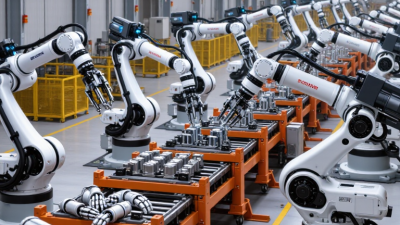
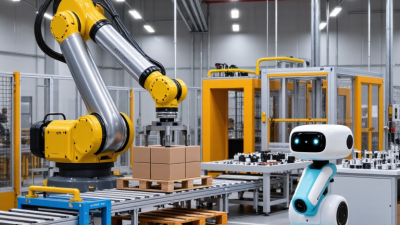
Choosing robot technology starts with the work environment, not the machine’s advertised speed. The International Federation of Robotics reported 541,302 industrial robots installed worldwide in 2023, with a global operating stock of about 4.28 million units. This scale reflects proven value, but it does not make every robot suitable for every factory. A six-axis robot fits repetitive welding or painting, while a delta robot handles rapid picking. Mobile robots suit long warehouse routes, provided floors remain clear and predictable.
Assess capabilities against real operating conditions. Measure payload, reach, repeatability, cycle time, sensing, and changeover needs. In a dusty workshop, sealed hardware and simple maintenance may matter more than advanced vision. In a mixed human workspace, force limitation, speed monitoring, guarding, and validated risk assessments are essential under ISO 10218 and ISO/TS 15066 guidance. Collaborative operation is not automatically safe. Poorly planned handoffs can still create pinch points.
Test the robot with actual materials, lighting, packaging, and seasonal demand. A pilot should record rejected parts, recovery time, energy use, and operator interventions. The International Federation of Robotics also identifies service robots as a growing field, but adoption data can hide difficult integration costs. That is where many business cases weaken. A robot may achieve impressive laboratory accuracy yet struggle with oily components or irregular boxes. Leave room for human judgment. Recheck the assumptions after four weeks of production.
Evaluate Vendors, Support Services, and Technology Reliability
Choosing the right robot technology starts with the vendor, not the machine. Ask how many similar installations they have completed. Request site references and performance records. A polished demonstration can hide weak maintenance planning.
Evaluate support before signing anything. Check response times, spare-part availability, software update procedures, and technician coverage in your region. Ask who handles failures at night. Then ask for service terms in writing. Reliable vendors explain limitations clearly. That honesty matters. During a factory visit, inspect cable protection, sensor placement, and the cleanliness of control cabinets. Small details often reveal engineering discipline. Still, references can be selective, so verify claims with independent users.
Tips: Test the robot during your busiest shift, not only in a quiet showroom. Measure cycle time, error recovery, energy use, and operator training hours. Include a failure drill. Can staff restart the system safely without waiting for outside help? Record every result. A simple trial may expose integration problems earlier than a long presentation. I have seen teams focus too heavily on speed and underestimate support costs. That mistake is understandable, but expensive. Technology reliability also requires regular inspections, clear ownership, and realistic maintenance budgets. Ask vendors to explain what happens after the warranty ends. Their answer may change your decision.
Select, Test, and Measure the Right Robot Solution
Choosing robot technology should begin with the work, not the machine.
Start with the task. Map each movement, delay, error, and safety risk across a normal shift. The International Federation of Robotics reported 541,302 industrial robots were installed worldwide in 2023. That growth shows strong demand, but adoption alone does not prove suitability. A robot must fit your floor layout, product variation, staffing model, and maintenance skills.
Select two or three possible solutions against measurable requirements. Test them with real materials, realistic cycle times, and ordinary operators. Use the same workload for every trial. Record throughput, changeover time, rejected units, energy use, and unplanned stops. A polished demonstration can hide difficult cleaning, awkward loading, or frequent software adjustments. Test the rough edges.
Measurement should continue after installation. Compare actual results with the baseline, including labor hours, downtime, training time, and total operating cost. The IFR World Robotics 2024 report lists more than 4.2 million industrial robots operating globally, yet performance still depends on integration quality. Safety validation also needs documented procedures and trained staff. A useful pilot may reveal that partial automation is better than full automation. That is not failure. It is evidence. Revisit the assumptions when demand changes, because a solution that works today may become expensive during seasonal peaks. Metrics often expose uncomfortable truths.