A robot is more than a machine that moves. It senses its surroundings, processes information, and acts through motors or other mechanisms. The degree of independence varies. Some robots repeat carefully programmed motions; others adjust when a person, package, or obstacle appears. To define robot clearly, it helps to look at both its capabilities and its setting.
Joseph F. Engelberger, an industrial robotics pioneer, is often credited with saying, “I can’t define a robot, but I know one when I see one.” The line captures a real challenge: the boundary between robots and automated machines is not always neat. That distinction matters. In 2026, common types include industrial arms on factory lines, collaborative robots working near people, autonomous mobile robots carrying goods, and service robots assisting in hospitals or homes. Humanoid robots attract attention, but their practical uses remain more limited than headlines can suggest. Progress is real, but uneven.
This guide explains what makes a machine a robot, how major types differ, and where each one fits. Picture a mobile robot pausing at a crowded warehouse aisle, or a robotic arm placing a component with repeatable precision. These examples show why task, environment, and human oversight matter. The categories can overlap, and labels are sometimes used loosely. That is worth questioning. A useful definition should clarify what a robot can do—not promise what it cannot.
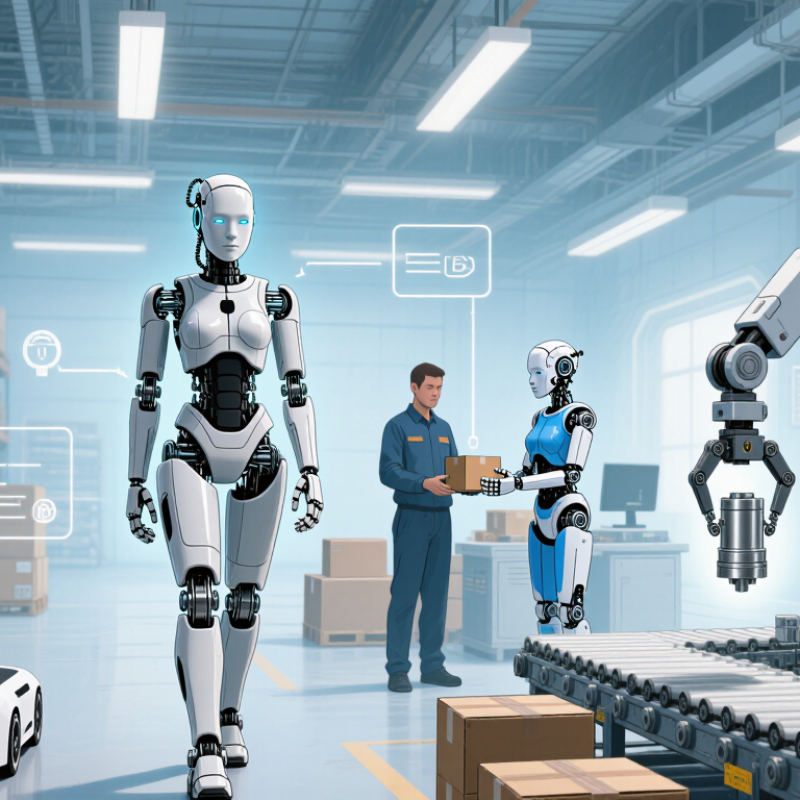
What defines a robot in 2026? A useful starting point is ISO 8373:2021, which describes a robot as a programmed, actuated mechanism with some autonomy for movement, manipulation, or positioning. In practice, a robot combines a physical body, control software, and sensors or other inputs. A fixed machine that repeats one motion may qualify, while a smart speaker usually does not: it lacks a body that acts on its surroundings. The boundary is not perfectly tidy.
Autonomy is the key distinction. A robot can carry out a task with limited human direction, then adjust its action when sensors detect a change. Think of a warehouse mobile robot slowing near a person or a robotic arm correcting its grip on a moving part. It need not look human. Not quite. Some systems work in tightly controlled settings; others navigate less predictable spaces, but still need careful oversight.
Industry data shows how broad the category has become. The International Federation of Robotics reported 4,281,585 industrial robots operating worldwide in 2023, in its World Robotics 2024 report. Its service-robot report counted about 205,000 professional service robots sold that year. These figures describe different robot groups, so they should not be treated as a single market total. A useful definition needs room for both factory arms and mobile service machines, without labeling every automated device a robot.
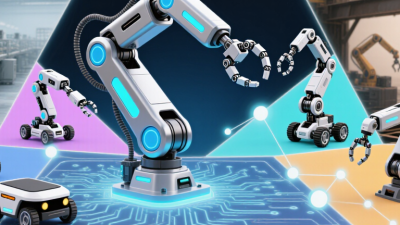
A robot is a machine that senses its surroundings, processes information, and performs actions. Its usefulness depends on how well its parts work together. A mobile robot, for example, may use cameras or distance sensors to detect a chair, a controller to choose a route, and motors to turn its wheels. That sounds simple. In a real room, changing light or a loose cable can disrupt the plan.
Core components each have a distinct role. Sensors collect information, such as distance, temperature, or position. The controller interprets that information and sends instructions. Motors and other actuators create movement, while a power source supplies energy. A frame supports the equipment, and software sets the robot’s behavior. Communication links may let it receive commands or share data. No sensor is perfect. Engineers often test a robot in the conditions where it will actually work, then adjust its settings. Integration can be messy, and one overlooked connection may matter more than a clever feature.
Tips: Match sensors to the task. Check that the robot can stop safely when its readings are uncertain. Keep cables secure, inspect moving parts, and test under realistic lighting and floor conditions. Small checks help.
What Is a Robot Definition and Top Types in 2026?
How Robots Are Classified by Design and Function
A robot is a programmable machine that senses its surroundings and performs tasks with varying levels of autonomy. Design classification describes its shape and movement. Articulated robots use rotating joints; Cartesian robots move along straight axes. Mobile robots travel on wheels or tracks. A six-axis arm can reach around a fixture, while a compact wheeled unit can carry bins down an aisle. The categories blur in practice.
Function offers another useful lens: industrial robots handle tasks such as welding and assembly, while service robots support logistics, inspection, cleaning, or healthcare. IFR’s World Robotics 2024 report counted 4,281,585 industrial robots operating worldwide in 2023. It recorded 541,302 new installations that year. IFR also reported about 205,000 professional service robots sold, a 30% increase. These figures measure deployment, not usefulness or independence. A robot may fit several categories at once.
Tips: Classify a machine by both movement and task. Check its payload, reach, sensors, and operating environment before comparing types. A neat label helps, but real workflows are messier than charts suggest.
In 2026, robot types are easiest to understand by the tasks they handle. Industrial robots repeat precise movements on factory lines, such as placing parts or welding seams. They suit controlled spaces where speed and consistency matter. Collaborative robots work near people, often assisting with assembly or lifting. They still need careful setup; “collaborative” does not mean risk-free.
Mobile robots move materials through warehouses, hospitals, and production floors. Some follow mapped routes, while others adjust to obstacles such as carts or people. Service robots can clean floors, deliver supplies, or guide visitors in public buildings. A useful test is simple: does the robot reduce a tiring or repetitive task without creating extra work for staff? Sometimes the answer is no.
Medical and rehabilitation robots support clinicians with precise positioning, guided movement, or patient practice. They do not replace professional judgment. Agricultural robots can monitor crops, remove weeds, or assist with harvesting, often using cameras and sensors to assess plants. These categories overlap. A mobile unit might also be a service robot, and labels can obscure what matters: reliability in the actual setting. Before choosing one, teams should check its working range, maintenance needs, safety features, and performance around real people—not just in a demonstration.
A robot is generally an actuated mechanism programmable in two or more axes, with some degree of autonomy, that moves within its environment to perform intended tasks. The categories below describe common robot designs and applications; some robots fit more than one category.
| Robot type | What it is | Typical uses | Movement and work environment |
|---|---|---|---|
| Articulated industrial robot | A robot arm with several rotary joints, often designed to carry a tool or gripper. | Welding, painting, machine tending, assembly, and material handling. | Usually fixed to a floor, wall, or ceiling in a production cell. |
| SCARA robot | A selective-compliance arm with rotary joints for horizontal movement and typically a vertical motion axis. | Fast pick-and-place, small-part assembly, packaging, and inspection. | Typically fixed; suited to repeated work over a compact area. |
| Cartesian or gantry robot | A robot that moves along straight, perpendicular axes, commonly X, Y, and Z. | CNC machine loading, dispensing, 3D printing, palletizing, and large-area handling. | Mounted on rails or a frame; its work area is defined by its axis lengths. |
| Collaborative robot (cobot) | An industrial robot designed for applications where people and robots may share a workspace, subject to risk assessment and safeguards. | Light assembly, tending, inspection, and assisted handling. | Usually fixed; safe operation depends on the specific task, setup, and protective measures. |
| Automated guided vehicle (AGV) | A driverless vehicle that follows a defined route or guidance system, such as markers, wires, or mapped paths. | Moving materials between repeatable points in factories and warehouses. | Mobile; route flexibility depends on its guidance and control system. |
| Autonomous mobile robot (AMR) | A mobile robot that uses sensors and software to navigate and can typically plan routes around obstacles. | Warehouse picking support, goods transport, hospital logistics, and facility delivery. | Mobile; works in mapped indoor spaces and adapts its path to changing conditions. |
| Mobile manipulator | A mobile base combined with a robotic arm, allowing the system to travel and manipulate objects. | Flexible machine tending, picking, inspection, and material handling across multiple stations. | Mobile, with a manipulator that works within reach of the base. |
| Service robot | A robot that performs useful tasks for people or equipment outside industrial manufacturing. | Floor cleaning, delivery, inspection, hospitality support, and public-space guidance. | May be mobile or stationary; operates in homes, workplaces, or public settings. |
| Medical and surgical robot | A robot-assisted system used in healthcare; many surgical systems are controlled by clinicians rather than acting independently. | Surgical instrument positioning, rehabilitation, and laboratory or hospital logistics. | Often stationary or carefully localized in a clinical environment. |
| Humanoid robot | A robot with a human-like body plan, often including a torso, arms, and sometimes legs. | Research, human–robot interaction studies, demonstrations, and trials of tasks in human-designed spaces. | May walk or use wheeled mobility; capabilities vary widely by design and application. |
Note: “Top types” refers to widely used or actively developed categories, not a ranking by market size. A robot’s autonomy, safety requirements, and performance depend on its design and specific application.
Industrial robots are built for repeatable work in controlled spaces. They weld, paint, or move heavy parts along guarded production lines. The International Federation of Robotics reported 541,302 new industrial robot installations worldwide in 2023, in World Robotics 2024. Their strength is speed and consistency. Their weakness is that changing a production line can require costly reprogramming and safety adjustments.
Service robots operate beyond conventional factory cells. Mobile units carry bins through warehouses, while inspection robots check pipes, floors, or equipment. IFR reported about 205,000 professional service robot sales in 2023, a 30% increase over the previous year. That is substantial. Collaborative robots are designed to work near people, often handling repetitive tasks beside a human operator. Humanoid robots attract attention, but attention is not proof of practical value; many remain less established in routine commercial work. A robot carrying a tray through a busy corridor faces different challenges from an arm repeating a weld. Yet categories blur, and published figures count different uses and markets. The comparison is useful, but not perfectly neat.
Robots are programmable machines that perform tasks with varying levels of autonomy. This chart compares common robot types by whether they are designed to move from place to place: 0 = typically fixed in place; 1 = mobile.
Mobility is a design characteristic, not a measure of intelligence or capability. Individual robots may differ from the typical configuration shown.