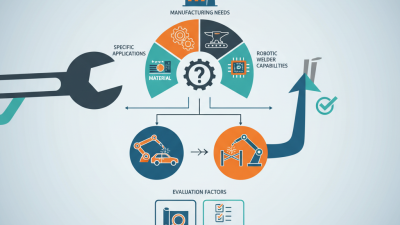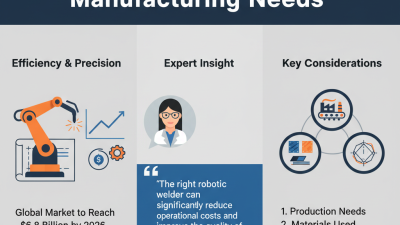
Choosing the best robotic welding machine from China requires more than comparing prices and promotional photographs. A reliable decision begins with the application: material type, joint design, welding position, production volume, and available floor space. A machine for automotive brackets may need different reach, payload, and repeatability than one for heavy steel frames. Small details matter. Cable routing, torch access, fixture accuracy, and fume extraction can affect daily productivity.
In practical factory evaluations, buyers should inspect weld samples rather than trust brochures alone. Ask the supplier to weld your actual parts, using your preferred wire, gas, and process settings. Examine bead consistency, spatter, penetration, and cycle time. A capable robotic welding machine should include a stable power source, dependable robot controller, suitable positioner, safety guarding, and clear programming support. It should also provide traceable specifications and realistic maintenance guidance.
Supplier experience is equally important. Check installation records, operator training, spare-parts availability, and response times after delivery. A lower purchase price may become expensive when troubleshooting takes weeks. Certifications and compliance documents should be verified for the target market, not simply copied from a standard template. Still, no evaluation is perfect. A factory demonstration may not represent long-term performance, and polished samples can hide difficult production conditions. Leave room for doubt. The best choice is usually the system that fits your process, receives honest technical support, and proves its value under repeatable, documented tests.
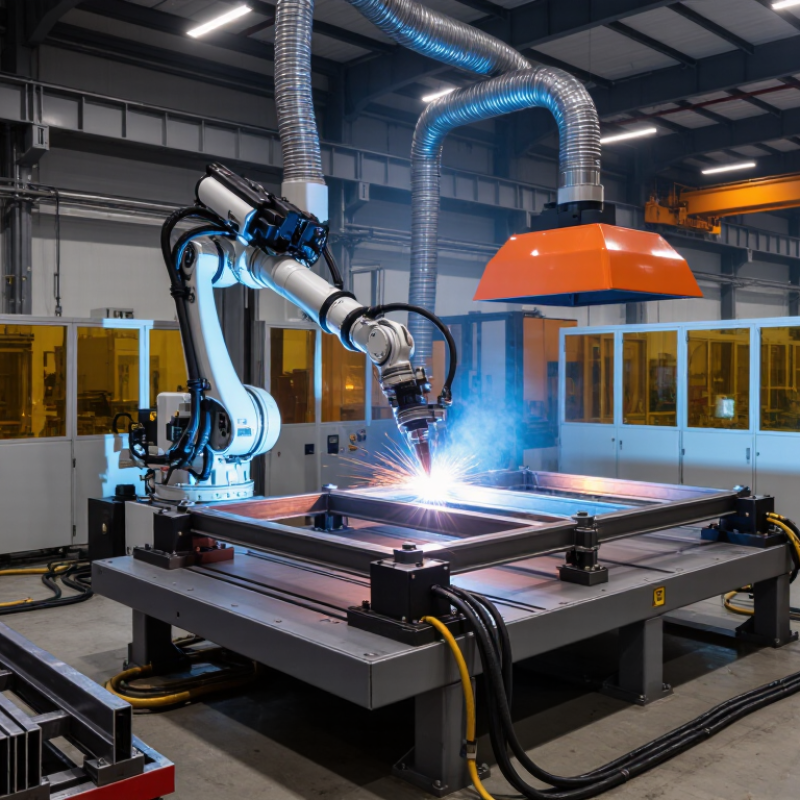
What is the best robotic welding machine from China? A practical answer begins with six-axis control and ±0.08 mm repeatability. Six axes let the torch reach angled joints, narrow corners, and changing workpiece positions. This flexibility matters in steel frames, pressure vessels, and automotive components.
The ±0.08 mm figure describes repeatability, not absolute accuracy. Buyers should request test results under ISO 9283 conditions, including temperature, payload, speed, and working radius. In production, fixture accuracy and torch calibration can reduce the real benefit.
The International Federation of Robotics reported 541,302 industrial robot installations worldwide in 2023. This growth shows wider automation adoption, but it does not prove every robotic welder delivers stable weld quality. Human experience still matters during setup, especially with thin materials and inconsistent joints.
Tips: Check bead samples, cycle-time records, and maintenance response before purchasing. Confirm whether the controller supports seam tracking, arc sensing, and offline programming. Ask for repeatability data from your actual welding position, not only a brochure. A ±0.08 mm specification sounds impressive, yet it may be less useful when fixtures move or steel distortion increases. This is an easy detail to overlook. Also compare the robot’s payload with the torch, wire feeder, and cable package. A small mismatch can create vibration, uneven travel, and costly rework.
What Is the Best Robotic Welding Machine from China?
The best robotic welding machine is not defined by speed alone. In real fabrication shops, output depends on torch access, fixture accuracy, material thickness, and operator training. A well-configured system can produce two to four times more finished welds than manual work. This result is realistic for repetitive frames, brackets, and long seam assemblies. It is not guaranteed for every job.
Labor savings may reach 30–60% when one operator manages loading, inspection, and basic adjustments. The robot maintains a steady travel speed and consistent arc length. That reduces fatigue and limits uneven weld appearance. A practical evaluation should track cycle time, rework, downtime, and consumable use. Do not measure only arc-on time.
Small details matter.
In one production trial, fixture changes improved access more than higher robot speed. Poor part positioning caused missed starts and extra grinding. The early estimate looked impressive, but rework reduced the real gain. This is an important warning for buyers.
Ask for sample welding using your actual parts, joint designs, and production volume. Verify repeatability, safety functions, programming support, spare-part availability, and operator training.
A machine that promises four times the output may deliver less if loading remains slow. Good engineering, stable fixtures, and disciplined quality checks decide whether the quoted 2–4× productivity and 30–60% labor reduction become measurable shop-floor results.
What Is the Best Robotic Welding Machine from China?
The best robotic welding machine depends on the process, material, and required production speed. MIG/MAG suits many steel and aluminum assemblies, especially when consistent wire feeding matters. A 3–12 m/min wire-feed range supports both delicate starts and faster production runs. However, maximum speed is not always better. Excessive feeding can increase spatter, distortion, and rework. TIG offers precise control for stainless steel, thin sections, and visible joints, but it usually requires slower movement. Laser welding can create narrow, low-distortion seams, although joint preparation must be accurate. Small gaps may expose weaknesses quickly.
In practical evaluations, inspect the robot’s path accuracy, torch stability, feeder response, and programming interface. Test each process on real sample joints, not only polished demonstrations. Measure penetration, bead width, spatter, and cycle time. Ask for duty-cycle data at the intended current and wire speed. A machine may advertise 12 m/min, yet perform poorly with long cables or inconsistent wire quality. That detail is easy to miss.
Tips: Match wire speed with voltage, travel speed, and material thickness. Use sample coupons before production approval. Check whether operators can adjust parameters without complicated menus. Keep spare liners and contact tips available. Record failed welds honestly; they often reveal setup problems. A useful trial should include awkward corners, starts, stops, and changing joint gaps. Perfect samples can mislead.
Match Welding Processes: MIG/MAG, TIG, Laser, and 3–12 m/min Wire Feed
| Welding Process | Typical Wire / Filler | Practical Wire Feed Range | Common Material | Typical Material Thickness | Shielding Gas | Main Advantages | Best-Fit Applications |
|---|---|---|---|---|---|---|---|
| MIG | Solid wire, commonly 0.8–1.2 mm | 3–12 m/min | Aluminum, stainless steel, mild steel | Approximately 1.5–12 mm, depending on current and joint design | Argon or argon-rich blends; helium may be added for aluminum | High productivity, continuous wire feeding, good suitability for automation | Frames, automotive parts, aluminum structures, general fabrication |
| MAG | Solid or metal-cored wire, commonly 0.8–1.2 mm | 3–12 m/min | Carbon steel and low-alloy steel | Approximately 2–20 mm with suitable passes and joint preparation | Argon/CO₂ blends or argon with a small oxygen addition | Fast deposition, stable arc control, strong performance in production welding | Steel cabinets, machinery, construction components, welded assemblies |
| TIG | Non-consumable tungsten electrode; optional filler rod or wire | Not normally specified by wire-feed speed; cold-wire systems may use about 0.3–3 m/min | Stainless steel, aluminum, titanium, carbon steel | Approximately 0.5–6 mm, with excellent control on thin sections | Pure argon; argon/helium blends for specific heat-input requirements | Precise heat control, clean welds, minimal spatter, high appearance quality | Sanitary tubing, precision parts, visible stainless-steel joints, thin sheet |
| Laser Welding | Optional wire, often 0.8–1.2 mm when gap filling is required | Wire-feed systems commonly operate around 3–12 m/min; many joints use no filler | Carbon steel, stainless steel, galvanized steel, aluminum | Commonly about 0.5–8 mm, depending on laser power, joint type, and pass strategy | Nitrogen, argon, or helium, selected according to material and surface requirements | Low heat input, narrow heat-affected zone, high travel speed, low distortion | Sheet-metal assemblies, battery components, electronics housings, precision production |
| Priority | Recommended Process | Why It Matches | Important Machine Features | Points to Verify Before Purchase |
|---|---|---|---|---|
| Highest general productivity | MAG | Well suited to repetitive carbon-steel production with continuous wire feeding at 3–12 m/min. | Seam tracking, synergic pulsed control, integrated wire feeder, fume extraction | Duty cycle, welding-current range, wire diameter compatibility, fixture repeatability |
| Flexible multi-material production | MIG/MAG | One robotic platform can support aluminum, stainless steel, and carbon-steel jobs with appropriate consumables and gas. | Quick-change torch, database of qualified programs, automatic wire calibration | Feeder performance, torch-cable length, gas-switching arrangement, program storage |
| Best weld appearance and precision | TIG | Provides accurate arc placement and controlled heat input for thin or visible joints. | Arc-length control, AVC, oscillation, cold-wire feeder, high-positioning accuracy | Cycle time, tungsten management, joint cleanliness, filler-wire synchronization |
| Lowest distortion and high speed | Laser Welding | A concentrated beam can reduce heat input and distortion when fit-up and process control are adequate. | Laser power control, seam tracking, protective enclosure, interlocks, optics protection | Laser safety certification, joint gap tolerance, reflective-material capability, service support |
| Heavy or variable joint geometry | MIG/MAG with robotic positioner | A positioner and multi-axis robot can improve access, torch angle, and repeatability on complex assemblies. | External axis synchronization, touch sensing, through-arc tracking, offline programming | Robot payload, reach, positioning accuracy, fixture design, recovery after faults |
The best robotic welding machine is determined by material, thickness, joint tolerance, required appearance, production volume, and safety requirements—not by wire-feed speed alone. The stated wire-feed ranges are practical selection ranges; final settings must be qualified through weld procedure testing.
What Is the Best Robotic Welding Machine from China?
The best robotic welding machine should match the actual work envelope, not only the catalog number. A reach between 1 and 20 meters covers very different production needs. Short-reach robots suit compact welding cells and smaller frames. Long-reach systems can reduce repositioning on large structures, but they need stronger foundations and careful cable management. Reach alone is not enough. A 6–20 kg payload rating must include the torch, wire feeder, hoses, brackets, and any tooling. Ignoring these details may cause vibration, slower movement, or unexpected accuracy loss.
IP65 protection is valuable in welding areas. It indicates resistance to dust and water jets from several directions. However, it does not make the robot waterproof. Coolant, grinding dust, heat, and spatter still require shields and routine cleaning. In practical trials, inspect wrist seals, cable covers, and connector placement after several shifts. Small design weaknesses often appear there first. Positioning accuracy also depends on installation, calibration, fixture rigidity, and floor movement.
Tips: Measure the largest workpiece before choosing reach. Leave operating clearance around the arm. Confirm payload calculations with the complete torch package. Request cycle-time tests using your real weld path and material thickness. A slightly smaller robot may perform better in a stable cell. That is easy to overlook. Check whether local technicians can support calibration, spare parts, and operator training. A technically impressive machine can still become a poor investment when maintenance response is slow.
Choosing the best robotic welding machine from China requires more than comparing purchase prices. The International Federation of Robotics reported 541,302 industrial robot installations worldwide in 2023, with China accounting for 276,288 units. That scale creates choice, but not automatic quality. Request the exact ISO 10218 compliance scope, risk assessment, safeguarding design, and validation records. A supplier should explain how the robot cell meets IEC 60204-1 for electrical equipment, including protective bonding, emergency stops, wiring identification, and fault protection.
Look closely at the working cell. Ask for a live demonstration with your steel grade, joint design, wire diameter, and required cycle time. Inspect guarding gaps, teach-pendant controls, cable routing, torch maintenance, and recovery after a simulated fault. Certificates alone are insufficient. They may cover the robot, not the complete welding system. That distinction is easy to miss.
Build a three-to-five-year total cost of ownership model. Include installation, programming, fixtures, shielding gas, wire, electricity, preventive maintenance, spare parts, operator training, software support, and production downtime. IFR’s World Robotics data shows strong automation demand, but it does not prove that every imported cell will deliver stable output. A lower quote can hide integration work. Sometimes, it does. Calculate cost per acceptable weld, not cost per machine. Challenge optimistic cycle-time claims, verify local service response, and obtain written acceptance criteria before payment. The model may still be imperfect, but visible assumptions make correction possible.