10 Best Robotics Engineers for Industrial Projects
Choosing the right robotics engineer can shape an industrial project long before a robot reaches the factory floor. The strongest candidates connect mechanical design, controls, software, and operator needs. They ask what the line must produce, where bottlenecks occur, and how downtime will be measured. Details matter.
Joseph Engelberger, an American engineer and robotics pioneer, is often quoted as saying, “I can't define a robot, but I know one when I see one.” His words capture a useful challenge: industrial robotics is more than equipment selection. A successful system must work reliably within its real environment, alongside existing machines, people, and production schedules. That takes practical judgment, not just impressive demonstrations.
This guide presents ten robotics engineers for industrial projects, with attention to experience in automation, machine vision, integration, commissioning, and long-term support. A polished portfolio is helpful, but it cannot answer every question. Ask candidates how they handle a misaligned part, a sensor that behaves inconsistently, or a production change that arrives late. Small gaps matter. The list is a starting point, not a universal ranking; the best fit depends on your process, budget, and team. Even a careful comparison can miss something. Site conditions, maintenance skills, and operator feedback deserve a place in the decision, too.
Industrial Robotics Engineering: Roles, Systems, and Project Scope
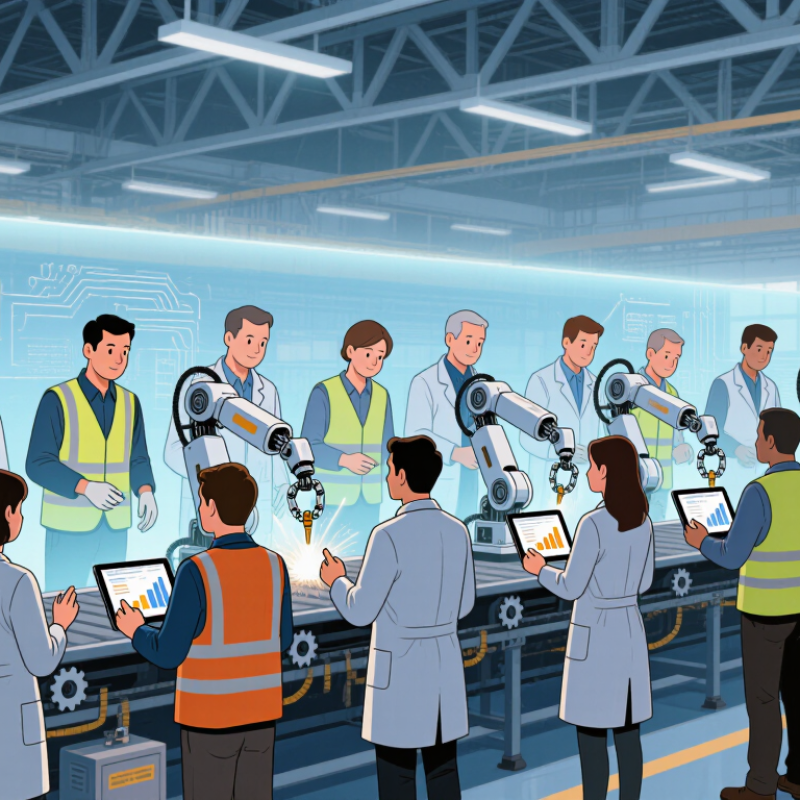
Industrial robotics engineering turns a production target into a working cell. The team may include mechanical, controls, vision, and integration engineers. They select robot reach and payload, design grippers, connect sensors and conveyors, and plan commissioning. The International Federation of Robotics’ World Robotics 2024 report counted 4,281,585 industrial robots operating worldwide in 2023, with 541,302 new installations that year. That scale makes clear why project scope must cover more than the robot itself. A cell also needs defined cycle time, part variation, changeover needs, operator access, and measurable acceptance tests. Small details matter.
A useful project plan maps each task to a system and an owner. For example, engineers should test whether a camera can locate a reflective part under real factory lighting, not just in a clean demo. They should also model tool changes, cable routing, and recovery after a fault. Still, the first layout is often wrong. Production data or a trial run may reveal awkward reach, slow loading, or frequent false rejects. Revising the design is normal; ignoring those findings is costly.
Tips: Before specifying equipment, record several shifts of cycle times and part defects. Set one clear acceptance target for throughput, quality, and safe access. Keep a small buffer for integration issues, because simulation rarely captures every factory condition.
Global Baseline: 4.28 Million Industrial Robots Operated in 2023
In 2023, an estimated 4.28 million industrial robots were operating worldwide. That figure describes the global installed stock, not robots added during that year. It represents millions of machines handling tasks such as welding, palletizing, assembly, and inspection. Behind each reliable cell is careful engineering. A robotics engineer must understand cycle times, part variation, floor space, and how people move around equipment. A robot that looks fast in a simulation may struggle when parts arrive slightly misaligned.
For industrial projects, the best engineers connect technical choices to measurable production needs. They can assess reach and payload, plan gripper changes, and coordinate controls with existing machinery. They also consider maintenance access and safe operation, not just the demonstration run. Small details matter. A cable routed across a service path can slow repairs; a poorly placed sensor can cause repeated stops. Experience on the factory floor helps reveal these issues, though experience alone is not proof of good judgment. Project records, testing methods, and clear explanations offer stronger evidence. The global robot count is impressive, but it does not tell us whether every installation is productive. That distinction deserves more attention.
Selection Criteria: Safety, Controls, Integration, and Lifecycle Performance
Industrial robotics projects are judged on more than cycle time. The best engineers make safety visible in everyday decisions. Ask how they assess reach, pinch points, stopping distances, and operator access before a cell is built. Strong candidates can explain their risk assessment in plain language and show how safeguards affect production tasks. Safety must work on a busy shift, not just in a drawing.
Controls expertise shows in practical details. Ask how an engineer handles sensor faults, recovery sequences, and changes in product variation. A clear answer should cover what the robot does when something goes wrong, and how operators regain control. Integration matters just as much. Conveyors, fixtures, vision systems, and existing equipment must share reliable signals and predictable timing. Request examples from commissioning, including a difficult handoff or a failure they had to diagnose. Look for precise explanations, not claims of flawless delivery.
Lifecycle performance separates a quick installation from a durable one. Engineers should consider spare parts, maintenance access, documentation, training, and future production changes. A cabinet that is hard to reach can turn a minor fault into lost hours. Ask how performance was measured after startup, not only during acceptance testing. No scorecard captures every factory constraint. That is worth admitting. Compare candidates on evidence, communication, and their willingness to revisit assumptions when real operating data disagrees with the plan.
Ten Robotics Engineers for Industrial Projects: Expertise and Track Records
Industrial robotics engineers are judged by more than impressive demonstrations. A reliable track record shows how their systems perform during real shifts, changeovers, and maintenance windows. Small details matter: a gripper that handles oily parts, or a robot that recovers safely after a sensor fault. Production is rarely as tidy as a test cell.
A strong team of ten may cover complementary expertise. Mechanical specialists design reachable, serviceable workcells. Controls engineers tune motion and coordinate equipment. Vision experts handle glare, changing part positions, and imperfect surfaces. Other engineers focus on simulation, end-of-arm tooling, safety assessment, data collection, or commissioning. Their experience should be supported by clear project evidence, such as cycle-time results, uptime records, documented trials, and lessons from deployment. Numbers need context; a fast cycle is not useful if quality suffers.
Look for engineers who explain trade-offs plainly and involve operators early. Practical experience often appears in modest decisions: leaving access around a cabinet, labeling cables clearly, or testing recovery procedures before handover. Not every project succeeds cleanly. A thoughtful engineer can describe what went wrong, what changed, and what still needs monitoring. That honesty is useful. It makes a portfolio more credible than polished claims alone.
Matching Engineers to Automotive, Electronics, and Logistics Projects
10 Best Robotics Engineers for Industrial Projects
Matching Engineers to Automotive, Electronics, and Logistics Projects
A shortlist of ten robotics engineers should reflect project needs, not impressive titles alone. Automotive work often demands repeatable cycle times, reliable fixtures, and careful integration with existing production lines. Ask candidates how they handle tool changes, sensor faults, and recovery after a stopped cell. Specific examples reveal more than a polished demonstration. Small details matter.
Electronics projects call for a different skill mix. Engineers may need to coordinate low-force handling, vision inspection, and precise calibration around delicate components. Ask how they validate placement accuracy across repeated shifts. For logistics, assess experience with mobile robots, changing routes, and pedestrian-aware workflows. A warehouse map can become outdated quickly. Practical adaptation counts.
Compare candidates through project scenarios, not résumés alone. Give each engineer a task involving a real constraint, such as limited floor space or inconsistent part presentation. Look for clear assumptions, test plans, and honest discussion of trade-offs. A strong candidate should explain what they would measure before promising a result. One common hiring mistake is overvaluing speed while overlooking maintenance access. The best fit may ask uncomfortable questions about downtime, operator training, or who owns process changes. That can slow a meeting, but it often exposes risks early.
Industrial Robot Installations by Manufacturing Industry
Global installations in 2023, showing where engineers’ automation expertise is in demand.
Automotive and electrical/electronics were the largest listed sectors. These figures count industrial robot installations; logistics service robots are classified separately and are not directly comparable. Source: International Federation of Robotics, World Robotics 2024; figures rounded.