Top 10 Robotics Jobs You Should Consider for a Bright Future?
In the rapidly evolving field of technology, robotics jobs represent a promising career path. Industries across the globe are increasingly relying on automation. This trend opens numerous opportunities for those interested in robotics. From manufacturing to healthcare, the demand for skilled professionals is soaring.
A career in robotics can be rewarding, yet it comes with its challenges. Many roles require a deep understanding of programming and engineering principles. This complexity can be daunting for newcomers. However, with dedication and the proper education, one can overcome these hurdles.
It's critical to choose a specialization that matches your interests. Robotics jobs can range from research and development to hands-on robotics maintenance. The variety ensures that there is a role for everyone. As we dive deeper into the top ten robotics jobs, it's essential to consider both the rewards and potential obstacles in this dynamic field.

Emerging Roles in Robotics: A Comprehensive Overview
Emerging roles in robotics are transforming job opportunities today. According to a recent report from the International Federation of Robotics, the industry is projected to grow by over 26% by 2025. This growth creates demand for specialized roles that didn't exist a decade ago. For instance, robotics data scientists are now essential, as they analyze and interpret data generated by robotic systems. These professionals bridge the gap between raw data and actionable insights.
Another crucial role is the robotics software engineer. They design algorithms and programs that enhance machine learning and artificial intelligence. According to a survey by McKinsey, 50% of companies are adopting AI within their workflows. The increasing integration of AI in robotics indicates the urgent need for software engineers with unique skill sets. Furthermore, as automation expands, roles focusing on ethical considerations in robotics are emerging, highlighting a more profound need for dialogue about technology's impact on society.
The evolving landscape indicates a fluctuating demand for specialized skills. Educational institutions must adapt to these changes, but many are lagging. Recent data from the World Economic Forum shows a skills gap in technical training. Companies may need to invest more in workforce development to close this gap and ensure they have the right skills to harness the benefits of advanced robotics.
Top 10 Robotics Jobs for a Bright Future
Key Skills Required for Robotics Professionals
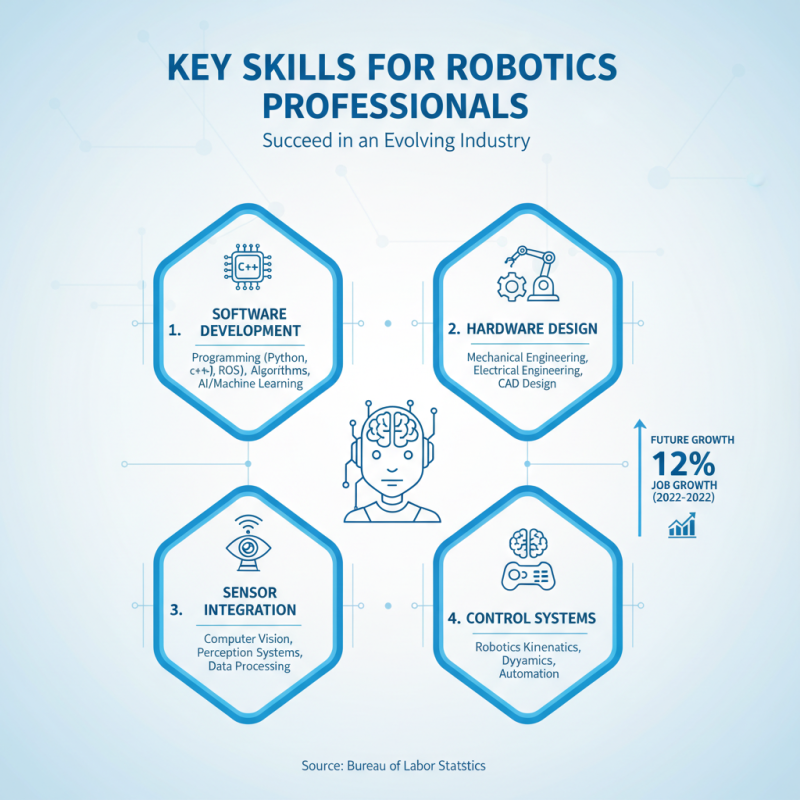
The field of robotics is rapidly evolving, creating numerous opportunities for skilled professionals. A recent report from the Bureau of Labor Statistics indicates that employment in robotics engineering is expected to grow by 12% over the next decade. This highlights a strong demand for individuals who possess key skills essential to succeed in this industry.
A solid foundation in programming languages, such as Python and C++, is crucial. Robotics professionals must be capable of coding algorithms and developing software for robotic systems. Additionally, a firm grasp of mechatronics integrates mechanics, electronics, and computing. According to IEEE reports, interdisciplinary knowledge enhances problem-solving skills, making candidates more competitive.
Soft skills are essential too. Effective communication fosters collaboration among teams. As robotics increasingly automates tasks, creativity becomes vital. Professionals need innovative solutions to complex challenges. Reports from industry leaders emphasize adaptability as a critical trait. The ability to learn continuously is no longer optional; it is imperative. Thus, individuals entering this field must cultivate a blend of technical and interpersonal skills to thrive in this promising environment.
Top Industries Hiring Robotics Experts Today
As the robotics sector expands, several industries actively seek qualified professionals. The manufacturing industry leads this charge, driven by automation needs. Reports suggest that over 50% of manufacturing companies are investing heavily in robotics for efficiency. This trend highlights a demand for robotics engineers and technicians.
Healthcare is another significant industry hiring robotics experts. With advancements in surgical robots and rehabilitation technology, around 30% of healthcare organizations are incorporating robotics into their practice. This shift requires professionals proficient in both robotics and medical applications. The growth in this sector promises numerous job openings.
The logistics and transportation industry is also undergoing a transformation.
Automated delivery systems and warehouse robots are reshaping operations. A study indicates that jobs in logistics robotics are expected to grow by
25% over the next five years. Despite these opportunities, many companies grapple with finding skilled talent, leading to a gap in the workforce. This situation reflects that while industries evolve, the need for expertise is paramount, compelling individuals to adapt continuously.
Future Trends in Robotics Job Market
The robotics job market is evolving rapidly. Advancements in artificial intelligence and machine learning are reshaping the landscape. These technologies create new roles focused on automation and enhanced efficiency. Engineers skilled in programming and software development will be in high demand. Their expertise will drive innovations in robotics systems.
Automation is penetrating various industries. Healthcare, manufacturing, and agriculture are leading the way. Robotics technicians will maintain and repair complex machines, ensuring smooth operations. As automation increases, the need for human oversight will also rise. This presents opportunities but also challenges, such as job displacement concerns.
Education is essential for those entering this field. Programs focusing on robotics, engineering, or computer science prepare candidates for future roles. However, not all programs are equal. Individuals must research and choose reputable institutions. Networking and internships can also offer valuable experience. As the industry grows, ongoing learning will be crucial. Staying informed about new technologies will help professionals remain relevant. The future of the robotics job market looks promising, but careful planning is needed.
Educational Pathways to Advance a Career in Robotics
In the rapidly evolving field of robotics, obtaining the right educational background is essential. Many paths lead to a successful career. A degree in engineering or computer science provides a solid foundation. Consider specializing in mechatronics, AI, or automation. These fields are growing, and jobs are abundant.
Hands-on experience is invaluable. Pursue internships or cooperative education programs during your studies. This will not only bolster your resume but also give you real-world insights. Some universities also offer project-based courses. Engaging in these can enhance your practical skills.
Tips: Immerse yourself in robotics clubs or competitions. Networking is crucial. Attend workshops and conferences to meet industry professionals. Don’t underestimate online courses. Many are affordable and provide crucial knowledge in areas like programming and robotics design. Keep an open mind. The field of robotics is diverse, and you might discover interests you never knew you had.