How to Choose the Best Robotic Welding Systems
Choosing robotic welding systems is not simply a matter of comparing robot speed or arm reach. The right system must suit the part, production volume, weld process, and people operating it. That fit matters. The International Federation of Robotics reported 541,302 industrial robot installations worldwide in 2023, with 4,281,585 robots operating across industries (World Robotics 2024). Those figures show how established automation has become, but they do not measure welding performance specifically.
A useful evaluation starts at the weld cell. Check whether the robot can reach each joint without awkward repositioning. Then assess torch access, fixture design, material variation, and how quickly operators can change jobs. Ask suppliers for cycle-time estimates based on your actual parts, not an ideal demonstration weld. The system may look fast on a clean sample. Production is messier.
Workforce and integration also deserve attention. A 2024 Deloitte and Manufacturing Institute study projected that up to 1.9 million U.S. manufacturing jobs could remain unfilled by 2033 if workforce challenges persist; this is a broad manufacturing estimate, not a welding-specific forecast. It underlines the value of straightforward programming, training, and maintenance support. Compare safety features, service response, consumable costs, and compatibility with existing equipment. Include the full cost of fixtures, extraction, installation, and downtime—not just the robot price. No checklist removes every uncertainty. A careful trial using representative parts may reveal problems a proposal misses. Choose a system your team can run reliably, not merely one with impressive specifications.
Define Production Requirements and Welding Objectives
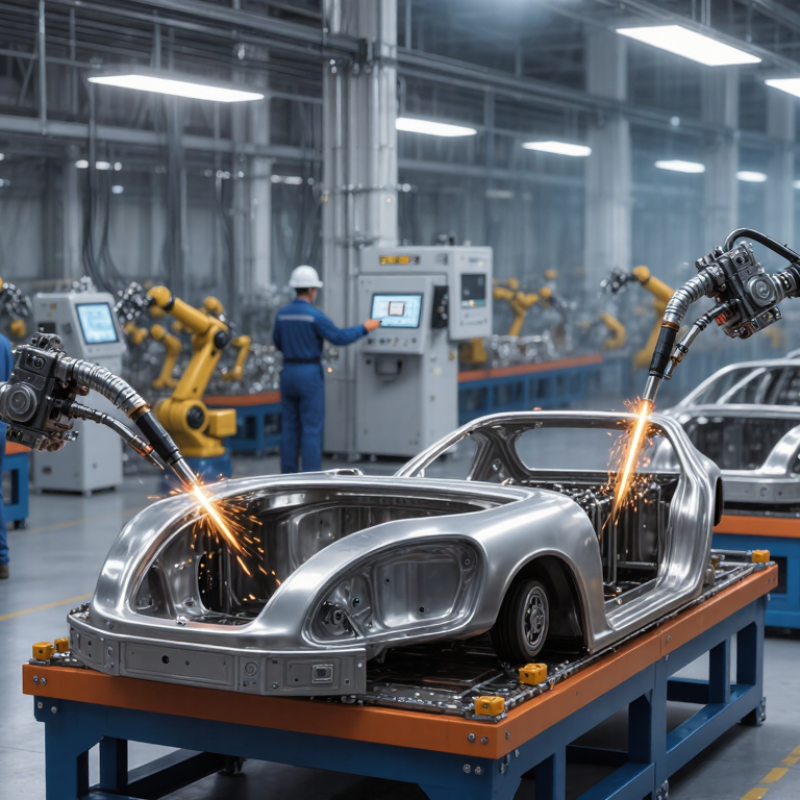
Before choosing a robotic welding system, describe the work it must repeat. List the base materials, thickness ranges, joint types, and weld positions. Note whether parts arrive clean, consistent, and correctly located. A small gap on a thin sheet can change the weld path; a heavy assembly may need a different fixture and reach. Measure actual demand per shift, including breaks, changeovers, and planned maintenance. Do not size the cell around peak output alone. Start with the part. That matters.
Turn the production needs into clear welding objectives. Define acceptable weld appearance, penetration requirements, and inspection methods with qualified welding personnel. Set targets for cycle time, first-pass yield, and availability, then record today’s baseline. Early cycle-time estimates are often optimistic. A spreadsheet can miss minutes spent loading parts, cleaning fixtures, or correcting fit-up. Include the operator’s skill level and the number of part variants. Frequent changeovers may make easy programming and accessible tooling more valuable than raw speed. Test representative parts under realistic conditions, and document the results before committing to a system design.
Match Welding Processes to Materials and Workpiece Designs
Choosing a robotic welding system means matching the process to the material and the part’s geometry. For thicker carbon-steel sections, MIG/MAG welding can provide productive, consistent welds. Thin stainless steel may need tighter heat control to limit distortion. Aluminum requires careful attention to surface condition, wire feeding, and joint fit-up. No process is ideal for every job.
Workpiece design matters just as much. Long, accessible seams suit different torch paths than small joints tucked behind flanges. Check whether the robot can reach each weld angle without collisions, and whether fixtures hold parts firmly without blocking access. A change in joint gap can affect weld quality, even when the programmed path stays unchanged. A polished sample weld can be misleading. Test representative parts, including difficult positions, before settling on equipment and process settings.
Tips: Bring real production parts to process trials. Record material grade, thickness, joint type, and acceptable distortion. Ask operators to review loading and fixture access; they may spot practical problems that a simulation misses. Leave room for adjustment. Part variation is rarely zero.
Compare Robot Types, Reach, Payload, and Positioning Accuracy
How to Choose the Best Robotic Welding Systems
Compare Robot Types, Reach, Payload, and Positioning Accuracy
A six-axis articulated robot can approach a weld from varied angles, while a gantry suits long, straight seams. Choose the type around the joint geometry, fixture access, and production volume.
The International Federation of Robotics reported 541,302 industrial robot installations worldwide in 2023, in its World Robotics 2024 report. That scale reflects broad adoption, but it does not make every cell a good fit. A clean simulation can still miss a clamp.
Check reach with the torch, cable package, and workpiece in position—not just the robot’s nominal radius. At a sample cell, dry-run the longest seam and watch for wrist collisions near corners. Payload must include the torch, sensors, and attached cabling; also check wrist moments and inertia. Small oversights matter.
For accuracy, distinguish absolute positioning accuracy from repeatability: a robot may return consistently to a point yet need calibration to reach its programmed coordinates. Compare test conditions and pose data, using ISO 9283 terminology where applicable. Ask for measured results across the working envelope, not one favorable number. I would still test a representative fixture; catalog figures rarely capture every cable bend or heat-related shift.
Evaluate Controls, Integration, Safety, and Technical Support
How to Choose the Best Robotic Welding Systems
Evaluate the controls at the point of use, not only in a sales demonstration. An operator should be able to adjust travel speed, weld schedule, and torch position without hunting through confusing menus. Ask to see a fault reset and a program change on the actual controller. Clear alarms save time. Check whether settings can be backed up and restored after maintenance. A polished screen is useful, but it does not prove the workflow is simple.
Integration deserves a close look. Confirm how the cell will exchange signals with fixtures, safety devices, and existing production equipment. Review the reach around real parts, including clamps and cable paths. A dry run with a sample workpiece can reveal awkward loading or blocked access. Small details matter. One limitation is easy to miss: a simulation may not reflect every change in part fit or shop-floor layout. Leave room for adjustment.
Safety features should suit the cell’s layout and work routine. Inspect guarding, access points, emergency stops, and how the system behaves during a fault. Then discuss technical support before purchase: response hours, remote troubleshooting options, spare-parts availability, and training for operators and maintenance staff. Request a clear escalation process. A system can be capable yet difficult to keep running if support is vague. Check what support includes, and record unanswered questions before committing.
Test System Performance and Compare Total Cost of Ownership
How to Choose the Best Robotic Welding Systems
Test system performance on parts that reflect your actual production mix. Use the same material thickness, joint design, fixture, and weld procedure you expect on the shop floor. Run real parts. Record cycle time, weld consistency, spatter, and changeover time—not just the fastest cycle shown in a demonstration. Check whether operators can load parts safely and recover from common faults without lengthy support. A few test pieces are not enough. Include repeated runs and at least one part that is awkward to position.
Then measure the full cost of ownership across the system’s expected service life. Add the purchase price to installation, guarding, fixtures, extraction, programming, and operator training. Include wire, gas, electricity, routine maintenance, and the cost of production lost during repairs or changeovers. Then measure. Ask suppliers to explain what their estimates assume, especially annual operating hours and service intervals. A low initial quote may require extra integration work; a higher one may include useful support. Compare costs using your own production data, not a generic payback estimate.
Keep the test results and cost assumptions together. If a system saves 20 seconds per part but needs frequent fixture adjustments, that time saving may shrink in real production. Small trial runs can also hide downtime. They are imperfect, but they reveal questions worth resolving before a purchase.
How to Choose the Best Robotic Welding System
Compare estimated five-year ownership costs alongside performance results from a consistent acceptance test.
Illustrative planning estimates in USD thousands, not supplier quotes. The five-year totals include system purchase, integration and training, maintenance, and consumables: $210K, $310K, and $440K, respectively. Actual costs vary by application. Before choosing, test all systems on the same representative parts and compare cycle time, weld quality, uptime, and changeover time. Labor, facility costs, energy, financing, taxes, and downtime are excluded.