Why Choose Robotic Welding Systems for Global Buyers?

For global manufacturers, welding consistency can shape product quality, delivery schedules, and long-term operating costs. Robotic welding systems offer repeatable torch movement, controlled parameters, and measurable production data across demanding factory environments. A skilled operator still matters. The robot does not replace judgment; it extends it. In a busy fabrication cell, sensors monitor joint position while the controller maintains programmed travel speed. That practical stability can reduce visible spatter, uneven beads, and avoidable rework. Results depend on preparation.

Experienced buyers look beyond arm payload and headline cycle times. They examine weld samples, fixture accuracy, wire compatibility, fume extraction, guarding, software access, and service response. A credible supplier should provide risk documentation, training records, maintenance guidance, and clear acceptance tests. Regional electrical requirements and applicable machinery standards also need verification before shipment. Remote diagnostics can help, but local technical support remains valuable when production stops at 2 a.m. Small delays become expensive.

The strongest investment case comes from evidence, not optimism. Request a representative trial using your actual material, joint design, and production rhythm. Compare first-pass yield, changeover time, energy use, and operator workload. No system is perfect. Fixtures drift, surfaces vary, and programming may require refinement. That is why a careful deployment plan includes calibration, inspection, spare parts, and periodic review. For global buyers, the right robotic welding systems combine automation with accountable engineering, transparent performance data, and realistic support after installation.
Why Choose Robotic Welding Systems for Global Buyers?

What Are Robotic Welding Systems?

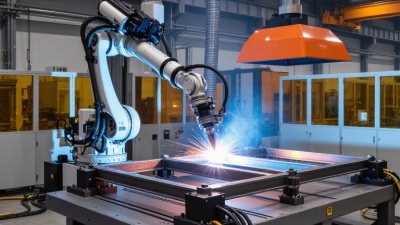
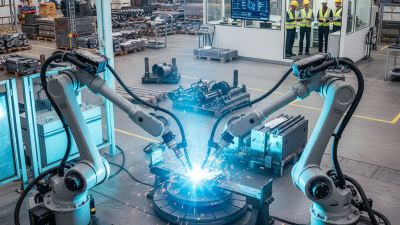
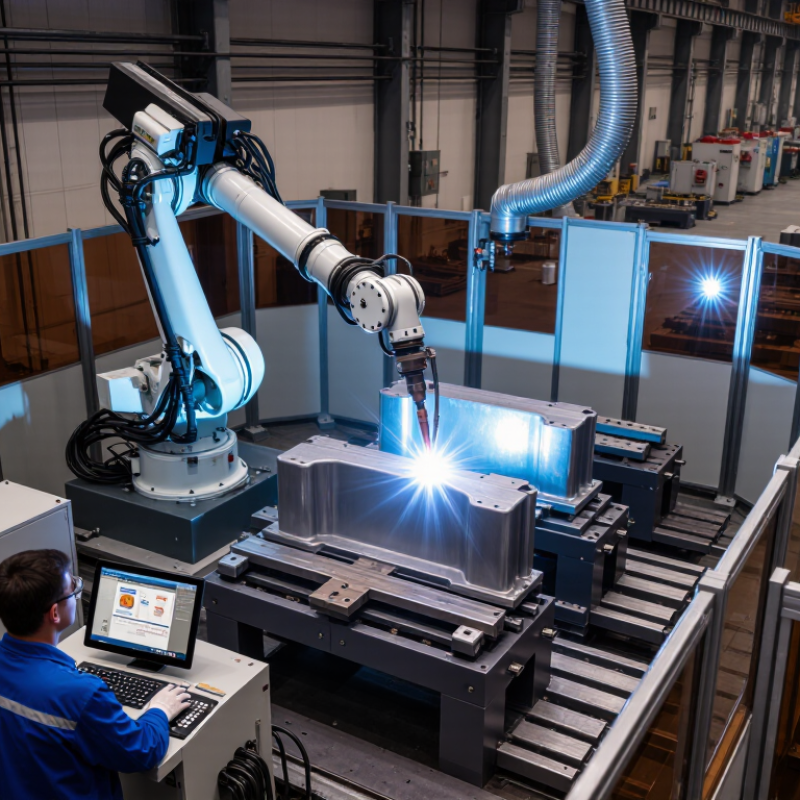
Robotic welding systems are integrated production cells, not simply robot arms. They combine a programmable arm, welding power source, wire feeder, torch, positioner, controller, and safety enclosure. Sensors may track joint location, while software controls speed, current, and torch angle. The result is a repeatable welding process for frames, pipes, brackets, and other metal assemblies.

The International Federation of Robotics reported 541,302 industrial robots installed worldwide in 2023. More than 4.2 million industrial robots were operating globally. These figures show strong automation demand, although they do not measure welding alone. For global buyers, system performance depends on material thickness, joint design, production volume, and local service capacity. A factory producing 300 identical frames daily may gain stable bead quality and shorter cycle times. A low-volume workshop may gain less. Automation is not automatically economical.

Tips: Define the weld procedure before choosing equipment. Check voltage compatibility, guarding standards, spare-part access, operator training, and remote-support limits. Request sample welds using your actual steel, wire, and joint position. Inspect bead width, penetration, spatter, and distortion. Include maintenance time in the cost model. A robotic cell can look impressive during a demonstration, yet perform poorly with inconsistent fixtures. That is an easy detail to underestimate.

How Do Robotic Welding Systems Operate?

Robotic welding systems combine a programmed robot, welding power source, wire feeder, sensors, and a secure fixture. An operator loads the metal parts into position. The fixture holds them steady while the robot follows programmed weld paths. The controller manages travel speed, torch angle, current, and wire delivery. Shielding gas protects the molten weld pool from atmospheric contamination.

During operation, sensors can detect part position, seam location, and torch distance. This helps the robot correct small variations between workpieces. The system may pause when it detects an unsafe condition or abnormal welding signal. In real workshops, the first program is rarely perfect. Operators often adjust speed, heat input, or torch movement after inspecting early welds. That practical feedback matters. It improves consistency without ignoring material thickness, joint design, or surface condition.

Tips: Choose a fixture that prevents movement. Keep contact tips and nozzles clean. Check gas flow before production begins. Record welding parameters for traceability. Train operators to review weld appearance, penetration, and distortion. A camera can support inspection, but it should not replace qualified human judgment. Test the system with representative materials before full-scale installation. Small errors can become expensive when repeated thousands of times.

Which Benefits Do They Provide to Global Buyers?

Global buyers often choose robotic welding systems for stable production across different markets. Their value begins with repeatable weld quality. A programmed torch follows the same path, speed, and angle on every suitable workpiece. This consistency can reduce rework, rejected parts, and material waste. It also supports clearer quality records for customers and auditors. Operators spend less time repeating difficult welds. They can focus on setup, inspection, and process improvement.

For international manufacturers, predictable output simplifies purchasing decisions. Robots can record welding parameters, production times, and error patterns. That evidence helps teams compare factories and improve future orders. Remote diagnostics may reduce delays when equipment needs attention. Training still matters. A supplier’s manuals, local support, and spare-part planning can strongly affect daily performance. Different voltage standards, safety rules, and import requirements also need careful checking before purchase.

Cost savings do not appear automatically. Higher utilization, lower rework, and steadier labor planning usually create the strongest returns. Yet automation is not magic. Poor joint design, unstable fixtures, or inconsistent materials can limit the robot quickly. In practical evaluations, some projects looked efficient but required unexpected integration work. Global buyers should test sample parts and measure cycle time before committing. The most reliable systems leave room for human inspection and process adjustments. That detail is easy to overlook.

What Factors Should Buyers Evaluate Before Purchase?

Why Choose Robotic Welding Systems for Global Buyers?

Before purchasing, buyers should test the production reality, not only the catalog specifications. The International Federation of Robotics reported 541,302 industrial robot installations worldwide in 2023. That scale shows strong adoption, but it does not guarantee suitability for every welding cell.

Start with payload, reach, torch access, and actual cycle time. Ask suppliers to weld your parts, including warped plates, narrow joints, and awkward fixtures. A clean demonstration can hide production problems. The first quote is rarely the best decision. Review weld penetration, spatter, rework rates, and changeover time under realistic conditions. Calculate total cost, including fixtures, programming, safety equipment, training, energy, maintenance, and downtime. A lower purchase price may become expensive after integration.

Safety and service deserve equal attention. The system should support risk assessment and applicable ISO 10218 requirements, with guarded zones, emergency stops, and controlled access. Buyers should also verify local electrical standards and worker-training obligations. Ask how quickly technicians can receive replacement parts across borders. IFR’s World Robotics 2024 report also shows that Asia accounted for about 70% of new industrial robot installations in 2023, highlighting the importance of regional support networks. Remote assistance helps, but it cannot replace skilled hands on the factory floor. A spreadsheet can still miss that. Examine programming simplicity, data logging, spare-part availability, and whether operators can recover from a torch collision without lengthy delays.

How Can Businesses Implement and Maintain These Systems?

Implementing a robotic welding system starts with a production study, not a purchase order. Engineers should measure joint types, part variation, cycle targets, and available floor space. A risk assessment must cover guarding, emergency stops, fume extraction, electrical isolation, and operator access. The workcell should meet applicable local safety requirements. It also needs room for loading, inspection, and maintenance. Small clearances matter. A qualified integration team can confirm reach, torch angles, fixture repeatability, and software compatibility before installation. The first layout is rarely perfect, so trial runs with representative parts are valuable.

During commissioning, technicians should document weld programs, wire settings, gas flow, tool-center-point checks, and accepted sample results. Operators need practical training on loading fixtures, responding to alarms, and recognizing poor weld appearance. Training should include controlled recovery procedures, never improvised entry into a stopped cell. Human oversight remains essential. Robots repeat instructions; they do not understand a warped part or contaminated joint. That limitation is easy to forget.

Maintenance works best as a visible routine. Inspect torch liners, contact tips, cables, fixtures, clamps, sensors, and guarding at scheduled intervals. Clean spatter before it changes torch alignment or fixture seating. Record faults, corrections, downtime, and consumable usage in a shared log. Calibration checks should follow operating hours and process requirements. Keep critical spares available, but avoid replacing parts blindly. A recurring alarm may indicate poor grounding, unstable material, or an incorrect parameter. Reviewing that evidence helps teams improve reliability without hiding inconvenient failures.

Why Choose Robotic Welding Systems for Global Buyers? - How Can Businesses Implement and Maintain These Systems?
Evaluation Dimension Indicative Data or Requirement Business Value Implementation and Maintenance Guidance
Best-Fit Production Profile Medium- to high-volume welding with repeatable joint designs and stable part presentation Automation improves consistency when the same or similar assemblies are produced repeatedly. Begin with parts that have predictable tolerances, accessible weld joints, and enough annual volume to justify engineering and integration costs.
Typical Robot Payload Approximately 6–20 kg for many arc-welding applications, excluding the positioner and workpiece Provides sufficient capacity for a welding torch, cable package, sensors, and related tooling in common fabrication cells. Calculate the complete wrist load, including tooling, torch hardware, dress pack forces, and dynamic loads. Select additional capacity when future tooling changes are expected.
Repeatability Approximately ±0.02–0.08 mm for many industrial welding robots; actual weld accuracy also depends on fixtures and part tolerances Supports stable torch paths and repeatable weld placement. Do not treat robot repeatability as total process accuracy. Control fixture wear, datum locations, component variation, and calibration intervals.
Arc-On Time Often targeted at 40–70% of available production time in a well-balanced welding cell Higher arc-on time can reduce non-value-added handling, waiting, and repositioning. Improve the result through dual-station layouts, suitable positioners, offline programming, quick-change tooling, and efficient loading procedures.
Indicative Cycle-Time Range Approximately 30–120 seconds per welded assembly for many small and medium fabricated parts Helps production planners compare automated capacity with manual welding capacity. Validate the complete cycle, including loading, clamping, part rotation, weld time, inspection, and unloading. A weld-only estimate is not sufficient for capacity planning.
Implementation Timeline Commonly 3–9 months from process definition to production ramp-up, depending on cell complexity and customization Creates a realistic schedule for engineering, procurement, installation, programming, operator training, and acceptance testing. Use stage gates: application review, layout approval, design review, factory acceptance test, site installation, production validation, and final acceptance.
Core Cell Equipment Robot, welding power source, torch and wire-feeding equipment, positioner, fixtures, safety guarding, controls, and fume-management provisions A complete cell addresses welding, positioning, operator safety, quality control, and material flow as one system. Confirm electrical standards, compressed-air requirements, guarding rules, emergency-stop circuits, ventilation needs, and local compliance requirements before shipment.
Operator and Technician Training At least one trained operator per shift plus designated personnel for programming, troubleshooting, and preventive maintenance Reduces downtime and prevents overdependence on external service providers. Train teams in teach-pendant operation, weld-parameter control, fixture setup, torch maintenance, fault recovery, safety procedures, and backup restoration.
Preventive Maintenance Frequency Daily checks, weekly cleaning and inspection, monthly functional checks, and scheduled service based on operating hours Regular care helps protect weld quality, equipment availability, and component life. Inspect torch consumables, wire-feed rollers, liners, grounding points, cable packages, filters, fixtures, sensors, and safety devices. Record all maintenance activities.
Common Consumable Controls Monitor contact tips, nozzles, liners, wire-feed components, shielding-gas flow, and grounding connections Consumable condition directly affects arc stability, spatter, porosity, and weld appearance. Set replacement criteria based on wear and weld-quality results rather than waiting for complete failure. Keep critical consumables locally available.
Quality Verification Use visual inspection, dimensional checks, parameter records, and applicable destructive or non-destructive testing Combines process monitoring with finished-part verification to identify variation early. Define inspection points, acceptance criteria, traceability requirements, and escalation procedures before production launch. Apply the relevant welding codes and customer specifications.
Safety Requirements Risk assessment, physical guarding or approved safeguarding, interlocks, emergency stops, safe access, and welding-fume controls Reduces exposure to robot motion, arc radiation, hot metal, fumes, sparks, and electrical hazards. Complete a site-specific risk assessment and verify compliance with applicable occupational-safety, electrical, machinery, and fire-protection regulations.
Global Deployment Considerations Voltage and frequency compatibility, regional safety standards, language support, spare-parts availability, logistics, and remote-service capability Improves installation consistency and service continuity across different countries. Prepare standardized documentation, multilingual work instructions, digital backups, critical-spares lists, and a clear escalation process for local and remote support.
Return-on-Investment Review Evaluate labor hours saved, throughput, quality losses, scrap, rework, utilization, maintenance, integration, and training costs Provides a more reliable business case than comparing robot purchase price with one labor rate alone. Build a total-cost-of-ownership model using actual production data. Test conservative, expected, and high-utilization scenarios before approving the project.
Data note: The figures shown are general planning ranges for industrial robotic arc-welding applications. Actual performance depends on the workpiece, welding process, material, joint design, fixture accuracy, production mix, safety requirements, operator skill, and local regulations. Final specifications should be confirmed through application testing and a site-specific engineering assessment.